

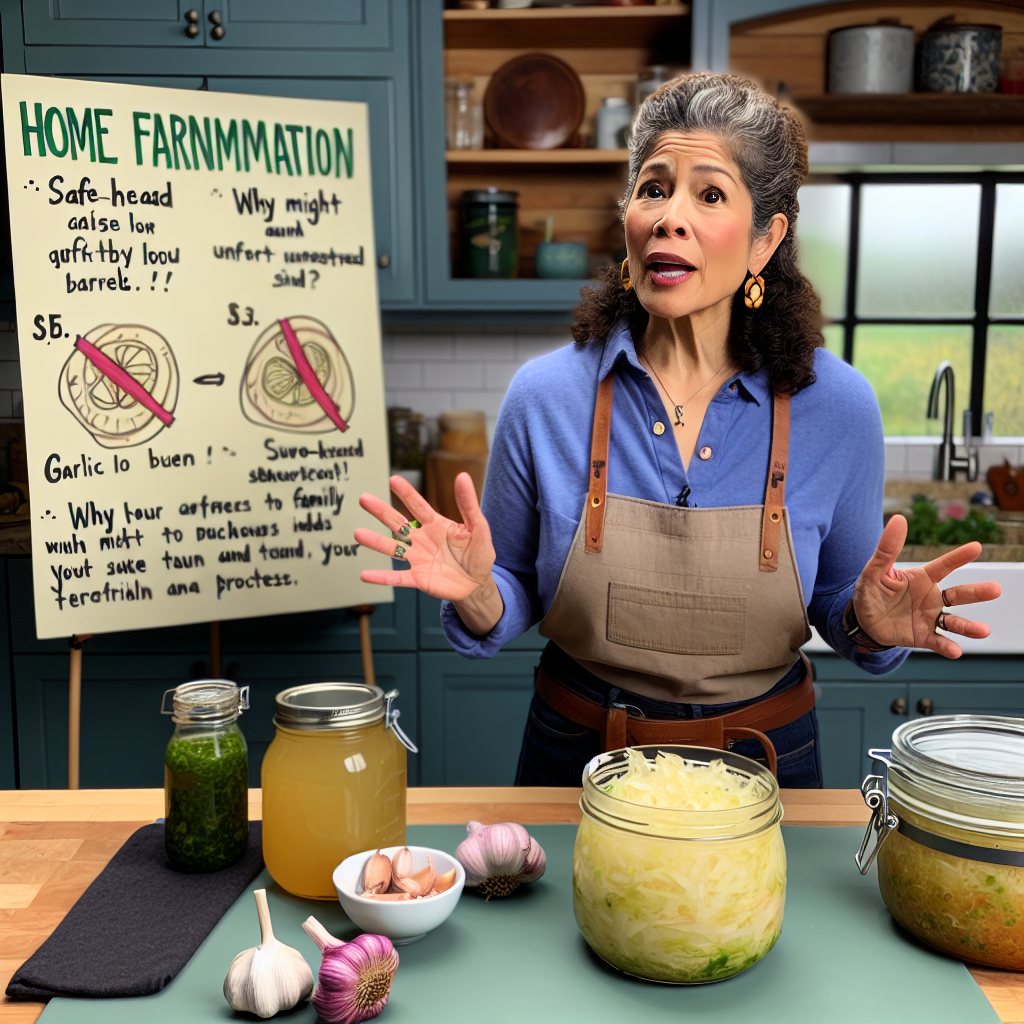
 # Ferment Fearlessly — Notes from Chef Mac
Fermenting at home is one of those joyful, slightly mysterious kitchen adventures — noisy jars, bubbling brines, and the satisfying tang that makes weeknight dinners sing. For busy homes balancing work, kids, and a social life (and for anyone who wants better flavor with less waste), a little technique goes a long way. Below, I’ll walk you through the sensible safety checks, the practical way to make whole-cabbage sauerkraut without a barrel, what that shocking green garlic is all about, and some small projects to keep you curious.
## Why ferments sometimes look weird — and when to relax
Fermentation is alive: it’s bacteria and enzymes doing their thing. That means color changes, cloudiness, fizz, and odd smells are part of the story. Lactic acid bacteria — the good guys in most vegetable ferments — produce tangy aromas and sometimes a cloudy brine. Those are usually signs you’re on the right track.
What’s usually fine:
– Clear or cloudy brine and gentle fizzing. The gas is a sign of activity.
– A white, filmy layer (kahm yeast) on top — it’s unattractive but generally harmless; skim it off and check the brine beneath.
– A pleasantly sour, tangy smell.
What’s a hard no:
– Fuzzy, colorful molds (green, black, bright pink). Mold penetrates and may produce toxins — toss it.
– A putrid or rotten odor, or a sulfurous rotten-egg smell.
– Slimy textures where vegetables should be crisp-ish.
When in doubt, trust your senses and err on the side of caution: food safety first, curiosity second.
## Quick safety checklist before you taste
Keep a mental checklist handy before that first nibble:
– Visual: Any fuzzy or colored mold on top? If yes — discard.
– Smell: Tangy/sour is good. Rotten, stinky, or sulfurous? Toss.
– Texture: Slimy or mushy in a way that’s inconsistent with the vegetable — discard.
– Taste test: If visual and smell look fine, take a tiny taste. If it feels off, spit and discard.
If you’re unsure, take clear photos and ask an experienced fermenter — but remember you’re the one responsible for the final call.
## Whole-cabbage sauerkraut without a barrel — the how and the why
Cultural context first: whole-head fermented cabbage shows up across Eastern Europe and the Middle East — think sarma (stuffed cabbage) and winter stores where families packed barrels and cellars. The barrel is traditional for scale and layering, but you absolutely don’t need one to make long-keeping, flavor-rich whole cabbages at home.
Why whole heads? The compact layers preserve texture and are perfect for rolling, braising, or slicing into soups. They ferment more slowly than shredded kraut, which gives a deeper, more developed tang.
What you’ll need (practical, home-friendly):
– Fresh, firm heads of cabbage (avoid damaged or soft spots).
– Salt: aim for ~2% of the cabbage weight (by weight, not volume). Use kitchen scale for consistency.
– Big containers: ceramic crocks, wide-mouth glass jars (several if you’re doing more than one head), food-grade plastic buckets with an airlock, or a large enamel pot.
– Weights: a clean plate, fermentation weight, or sealed bag of brine.
– Optional: an airlock lid or a loose cover to let gas escape.
Method basics (step-by-step):
1. Weigh and salt: If you’re doing a dry-salt method, rub about 2% salt into the outer leaves and the cut core area — salt draws out juices to make brine. Or make a brine (roughly 2–3% salt by weight in water) and pour it over tightly packed heads.
2. Pack tight: Place whole cabbage heads in your container as snugly as possible. Tuck extra outer leaves around the heads to help seal gaps.
3. Submerge: The most important rule is to keep vegetable matter submerged. Use a clean plate or fermentation weight to press the heads under the brine. If anything peeks above the brine it risks mold.
4. Gas management: Use an airlock or a loosely seated lid. Fermentation produces CO2 — allow that to escape while keeping contaminants out.
5. Ferment cool: Aim for around 60–72°F (15–22°C). Whole heads take longer than shredded kraut — plan weeks, not days. Check periodically for brine level and any surface films.
6. Finish and store: When the flavor is pleasantly tangy, move the cabbage to the fridge where fermentation slows. Properly fermented heads can keep for months in cold storage.
Practical tips for busy homes:
– Make a batch on a weekend, then use parts for sarma, chopped sides, or soups throughout the month.
– If you lack a scale, use about 1 tablespoon of salt per 2–2.5 pounds of cabbage as a rough home measure — still aim to get close to 2% when you can.
– If brine levels drop, top up with a 2–3% salt brine. Never add plain water.
## That intense green garlic — what’s happening?
If grated or sliced garlic turns vivid green or blue during fermentation, it’s usually a harmless chemical reaction. Garlic contains sulfur compounds and enzymes that, when exposed to acid (or in the presence of trace metals like copper), can form pigmented molecules. Younger garlic and certain varieties are especially prone to this color change.
Important distinction:
– Harmless color change: bright green, blue, or teal hues without off odors or fuzz. Safe to eat, though visually surprising.
– Bad sign: colored mold, fuzzy growth, or a foul smell — discard those.
So don’t panic if your garlic looks psychedelic after a few days — taste a little (if it smells fine) and you’ll likely find the flavor intact.
## Small projects to keep you curious
If you want to branch out between family dinners, try a couple of low-lift ferments:
– Tepache: Ferment pineapple peels with a little sugar for a fizzy, lightly fermented drink.
– Garlic honey: A sweet-savory pantry staple that mellows garlic and makes great glazes.
– Quick fruit ferments: Berries or citrus in a small brine for cocktail syrups or dressings.
– Olives or peppers: Make a big batch and use them through the week for sandwiches and snacks.
Pick one small project at a time — confidence builds by doing.
## Final takeaway from Chef Mac
Fermentation is forgiving when you pay attention to a few clear rules: keep things submerged, trust your senses, and understand that many oddities (cloudy brine, kahm yeast, and green garlic) are harmless. Whole-head sauerkraut is doable in a home kitchen without a barrel and makes weeknight cooking easier and more flavorful.
What ferment will you try next — a whole cabbage for stuffed rolls, a quick pineapple tepache, or perhaps a jar of green-clad garlic to spice up your meals?

