

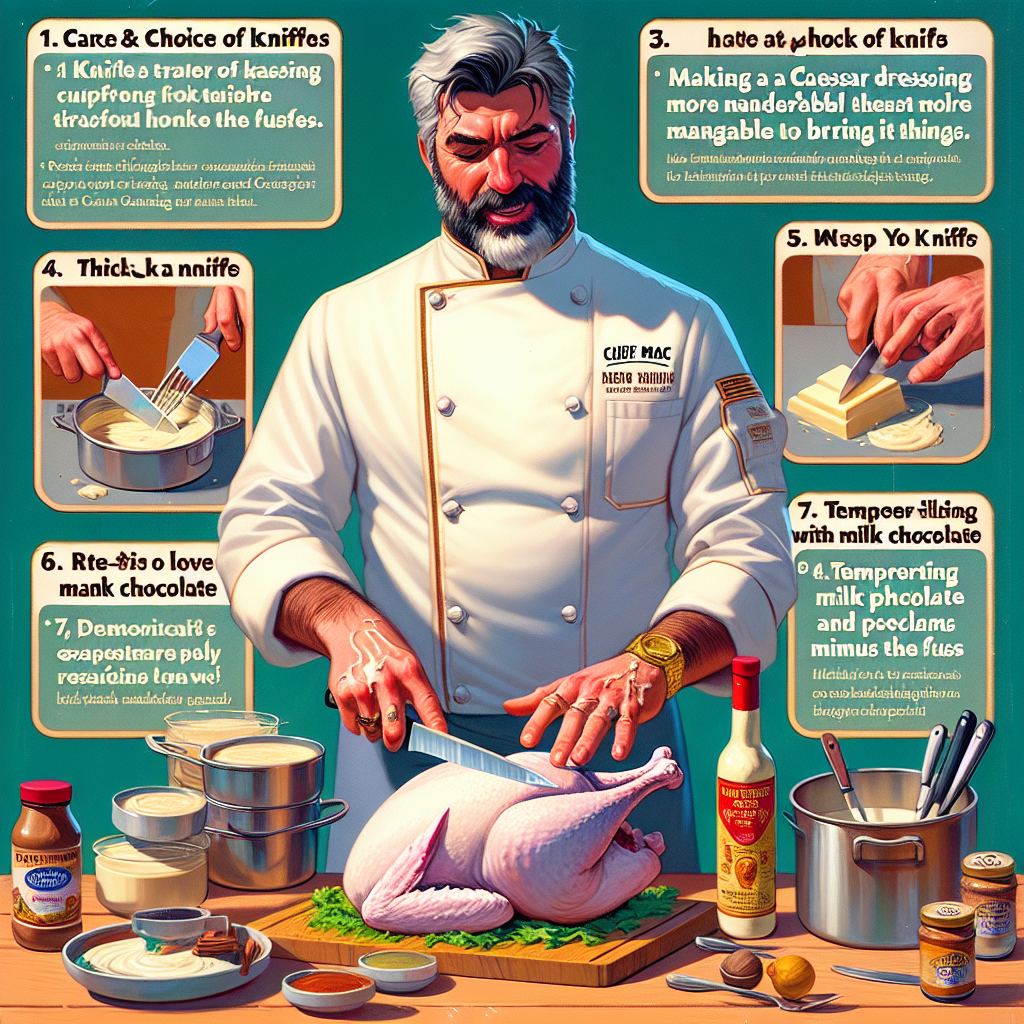
 # The Weekend Kitchen SOS: Knives, Caesar, Turkey and Spiced Chocolate — Fast Fixes for Busy Folks
We asked, you responded, and your kitchen confessions arrived like little SOS flares — knives that dont feel right, a Caesar that clings to the fork, a Butterball still in plastic, and chocolate that refuses to behave when you add spices. Pull up a stool. This roundup is for the people who cook on weeknights, juggle more than one life, and want tips that actually save time (and stress).
## Show Off Your Knives — and Buy, Care, Store Them Smartly
Knives are the workhorses of the kitchen, not trophies. For most home cooks, three knives do the heavy lifting: an 8–10 inch chef’s knife, a small paring knife, and a serrated blade for bread and tomatoes.
– What to look for: balance and comfort beat flash. A knife should feel like an extension of your hand. Test it with a few simple motions in the store if you can. Midpriced reputable brands usually give you the best balance of durability and value.
– Hone vs sharpen: honing realigns the edge and should be done frequently, even daily. Sharpening removes metal to reset the bevel and only needs to happen a few times a year, depending on use. If you dont want to fuss, get a pro to sharpen for you.
– Care basics: handwash and dry immediately. Never trust the dishwasher with a good blade. Put it away sharp and safe so little hands stay safe and the edge doesnt get nicked against other tools.
– Storage: a magnetic strip or in-drawer knife tray keeps blades protected and accessible. They save counter space and make your most-used tools easy to grab.
– For collectors: gorgeous knives are great — but a blunt heirloom is a danger. Keep a maintenance plan: honing, occasional professional sharpening, and routine inspection.
Why this matters: a sharp, well-cared-for knife is safer and faster. Youll make cleaner cuts, lose less juice from produce, and save time on prep. That momentum makes weeknight cooking feel less like a chore.
## Caesar Dressing Too Thick? How to Thin It Without Losing Flavor
That restaurant-light Caesar texture is not magic — it comes from technique.
– Gentle thinning: a spoonful of warm water will loosen an emulsion if you whisk it in gradually, but water dilutes flavor. Instead, think dairy: a splash of buttermilk, plain yogurt, or a little milk thins and softens the mouthfeel without flattening brightness.
– Use a blender: if your dressing is lumpy, gloopy, or separated, blitz it with a bit of warm water or lemon juice while the blender runs. That creates a more stable emulsion and gives a velvety finish like the pros achieve.
– Safety shortcut: classic Caesar often uses raw egg yolk. If youre nervous, use pasteurized eggs, a coddled yolk, or swap in mayonnaise (store-bought or homemade with pasteurized egg) for the same silky texture with less risk.
Why this works: emulsions are about dispersed fats suspended in liquid. Adding a compatible dairy gives the emulsion more volume and a creamier, pourable structure without losing the acid and umami that make Caesar sing.
## Butterball Turkey: Can I Take It Out of the Cooking Wrapper?
Short answer: yes — especially if youre changing the cooking method. The plastic or cook bag on a Butterball is meant for the package instructions. If youre spatchcocking, brining, rubbing, or otherwise prepping differently, remove the wrapper.
– Thaw safely: thaw in the fridge, not on the counter. Smaller birds can defrost in a day; large ones take several. Plan ahead.
– Removing the packaging: youll need to take the turkey out if youre butterflying or applying a dry rub under the skin. Keep a clean work surface, and avoid cross-contamination by washing hands and sanitizing surfaces afterward.
– Brine basics: dry-brining is low-fuss and effective — rub salt on the skin and under it, let it rest in the fridge for 24 to 48 hours. If you wet-brine, keep it chilled and calculate your salt ratio. Under-the-skin brining distributes seasoning without oversalting the cavity.
– Cook to temperature: use a thermometer and cook to 165°F in the thickest part of the breast and thigh. Let the bird rest so juices redistribute before you carve.
Why this matters: packaging instructions are a default, not a rule. Removing the wrapper lets you control flavor, texture, and technique. Planning and a thermometer are your safety net.
## Tempering Chocolate with Spices — How and When to Add Flavor
Chocolate tempering is a lesson in patience and chemistry. Adding spices changes the game, but in ways you can control.
– Dont dump dry spices into melting chocolate. Solids and volatile spice oils can interfere with proper crystallization, leaving chocolate dull or streaky.
– Infuse first: steep toasted spices in warm cream, milk, or a bit of melted cocoa butter. Let the flavors bloom, then strain out the solids. Use that strained fat to make ganache or to finish your chocolate so the flavor is clean and integrated.
– Use extracts or spice oils for a clear, intense note without particles. A little goes a long way, especially with concentrated oils.
– If you must use ground spice, toast and sift it very finely, then fold it in at the very end. Test a small piece to check texture and sheen.
– Tempering approach: use the seeding method — melt to the right high temperature for your chocolate, seed with finely chopped tempered chocolate to bring it down, and work at a stable working temperature. Avoid adding untempered chocolate or liquid mid-process.
Why this works: tempering creates stable cocoa butter crystals that give chocolate its snap and gloss. Introducing water, solids, or unstable oils at the wrong time disrupts that crystalline structure. Infusing into fat keeps the chemistry intact while layering flavor.
## Quick Takeaway
– Keep one great chef’s knife, a paring knife, and a serrated knife. Hone often, sharpen occasionally, and store them safely.
– Thin Caesar dressings with buttermilk, yogurt, or a little warm liquid in a blender for a lighter, stable emulsion. Use pasteurized eggs or mayo if raw yolks concern you.
– You can remove a Butterball or any turkey from its wrapper to spatchcock, brine, or rub — just thaw safely, handle with care, and use a thermometer.
– For spiced chocolate, infuse spices into a fat or cream, strain, and then temper. That keeps your finish glossy and smooth.
Cooking is a series of small choices that add up. With a few basics and a little timing, you can turn a frantic weekend into a tasty, manageable one. Now tell me: which one of these fixes will you try tonight, and what little kitchen crisis should Chef Mac tackle next?

