
 # Stirring the Pot with Chef Mac: Practical Fixes for Real Weeknights
If your dinner rotation reads like a playlist stuck on repeat — stir-fry, tacos, pasta, chicken and rice — take a breath: you’re doing it right. Repetition is efficiency, comfort, and survival for busy households. The trick isn’t to reinvent dinner every night; it’s to understand the techniques and small flavor moves that make those reliable meals sing. Here are four kitchen fixes I use in my restaurant and at home to keep things simple, flavorful, and family-friendly.
## 1) Embrace the “repeat menu” — and upgrade it
Repeat menus aren’t boring if you treat each meal as a template. Think in building blocks: protein + starch + veg + sauce. That modular approach turns one base into many meals with a single swap.
– Build modular bowls: roast chicken one night, shred it and toss into tacos the next. Swap rice for quinoa, or broccoli for roasted bell peppers.
– Keep a pantry of high-leverage add-ins: jarred roasted peppers, canned chickpeas, preserved lemons, good hot sauce, or a jar of sambal. A spoonful can change the whole mood of a dish.
– Schedule an “experiment” night: try one new spice, condiment, or technique weekly to expand taste horizons without the pressure of nightly reinvention.
Why this works: our brains love patterns and short-cuts. By standardizing structure, you lower decision fatigue while still creating variety. Culturally, millennial cooks value both convenience and authenticity — modular meals respect both.
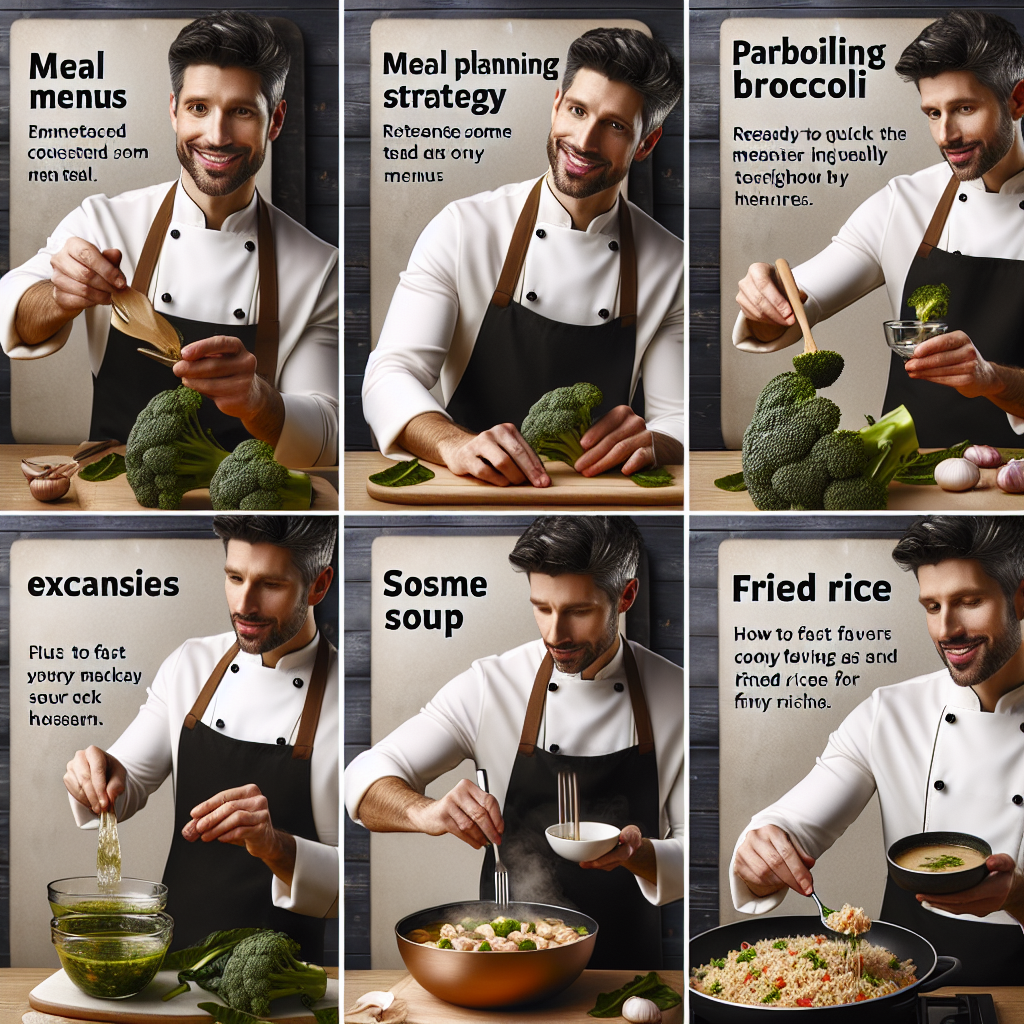
## 2) Parboil broccoli before stir-frying: yes, do it (the right way)
Broccoli can be stubborn — raw at the center, scorched on the florets. Parboiling (a short blanch) solves that tension and keeps color and texture intact.
Quick method
– Bring a pot of salted water to a boil. Salt seasons quickly and helps preserve color.
– Trim and cut broccoli into bite-sized florets.
– Boil 2–3 minutes (2 for small florets, 3 for thicker stems).
– Immediately plunge into an ice bath or run under cold water to stop cooking.
– Drain, then toss in a very hot pan with oil and sauce for 60–90 seconds to finish and char.
The why
Parboiling softens the fibrous stems (cellulose and tough pectin) so the pan finish can focus on Maillard caramelization, not on trying to tenderize. The ice bath halts enzymatic cooking and preserves that punchy green — chlorophyll sulks when overheated, so stop the heat quick. If you’re short on pots, steaming for 3–4 minutes gives a similar result.
Pro tip: salt your blanching water the way you’d salt pasta — it seasons the veg through.
## 3) Sick-day chicken soup that actually heals (and is fast)
Soup isn’t just nostalgia; it’s pragmatic nourishment. You don’t need hours to coax flavor. Focus on extraction, balance, and heat control.
Simple, forgiving chicken-and-wild-rice soup (fast version)
– Brown 2–3 bone-in chicken legs or thighs in a little oil for color and flavor.
– Add a chopped onion, 2 carrots, 2 celery stalks, and 2 smashed garlic cloves. Cook 3–4 minutes.
– Add 8 cups water (or low-sodium stock), a bay leaf, salt and pepper. Simmer, covered, 25–35 minutes.
– Remove chicken, shred the meat, discard bones. Add wild rice and simmer per package directions — swap quick brown rice to save time (add in last 10–15 minutes).
– Return chicken, adjust seasoning, and finish with a squeeze of lemon and chopped herbs.
The why
Browning creates Maillard depth; the short simmer extracts collagen from the bones, which gives body and a comforting mouthfeel. Acidity (lemon or a touch of vinegar) wakes up the broth and brightens flavors — especially important when you’re using plain water or low-sodium stock.
Time-savers: rotisserie chicken, pre-chopped mirepoix, or an Instant Pot can cut this down dramatically. Soup is culture’s universal comfort — think of it as edible TLC that also feeds a crowd.
## 4) Sauce ideas to rescue egg fried rice (and everything else)
Soy sauce is fine, but a small sauce play adds layers of umami, gloss, and balance that make weeknight rice taste restaurant-level.
Family-friendly mix (per 2–3 servings)
– 2 tbsp light soy sauce
– 1 tsp oyster sauce (or 1/2 tsp fish sauce for more punch)
– 1/2 tsp toasted sesame oil
– 1/4 tsp sugar or honey
– Optional: 1/4 tsp chili garlic sauce for heat
What each does
– Light soy: salt and base seasoning.
– Oyster or fish sauce: deep umami that reads savory even to picky eaters.
– Sesame oil: aroma — add at the end so it doesn’t burn.
– Sweetener: rounds edges and helps the sauce glaze the rice.
Technique tips: use day-old rice (it’s dryer and fries better), keep the pan/wok very hot, and add a splash of neutral oil or water with the sauce so it spreads and glazes. For gluten-free swaps, use tamari and mushroom-based umami instead of oyster.
Cultural note: fried rice is a great example of resourceful cooking across Asian cuisines — it’s how chefs turn leftovers into a star. Respect that tradition by keeping the technique simple and the flavors balanced.
## Putting it all together: make life easier, not harder
– Batch a sauce: double your favorite and jar it. It becomes an instant flavor elevator for bowls, roasted veg, or sandwiches.
– Cook once, stretch twice: roast or poach extra protein and rework it across meals.
– Keep fail-safes: frozen veg, eggs, curry paste, and jars of pickles can salvage a tired plan and add personality.
A little technique goes a long way. Parboiling fixes texture problems; a reliable sauce transforms bland staples; a quick soup recipe gives comfort and nutrients without fuss. These are the sorts of small, repeatable wins that make weekday cooking enjoyable instead of exhausting.
So: what repeat meal will you remix first — and which tiny technique will you try tonight to make it sing? Let’s taco ’bout it: share your kitchen experiments and favorite pantry save-ins.

