

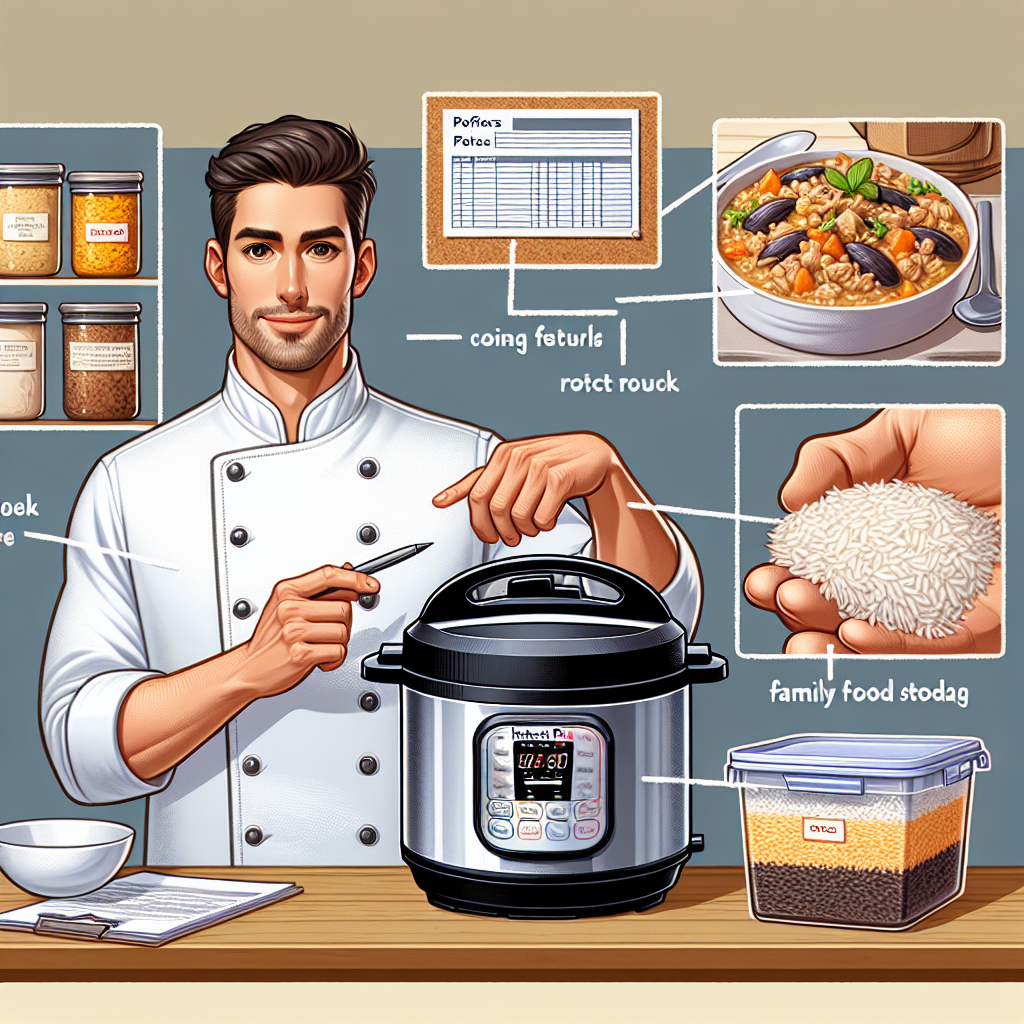
 # Instant Pot Smarts: Buy, Cook, and Store Like a Pro (Without the Panic)
If you’ve ever stood in the kitchen wondering whether you just killed dinner or created a miracle, you’re in good company. I’m Chef Mac, and I’ve seen Instant Pot triumphs and tragedies in equal measure. This appliance is a modern miracle when you respect its mechanics and the food-safety basics behind it. Let’s taco ’bout how to shop smart, cook smarter, and store like a pro—without the panic.
## Why safety matters (and the common-sense rules)
Pressure cookers work by trapping steam to raise the temperature inside above boiling, which speeds cooking and tenderizes tough cuts. That same trapped steam makes them efficient and, if ignored, potentially dangerous. A compromised seal, a warped lid, or a jammed pressure valve can cause improper sealing or uncontrolled steam release.
Why this matters beyond the obvious: inconsistent pressure equals unpredictable results. Undercooked beans, for example, can be toxic if not cooked long enough; foods that don’t reach hot-holding temperatures during cooling can grow bacteria rapidly. Use the manufacturer’s manual as your baseline rulebook, then layer in guidance from established food-safety organizations. Flag wildly risky advice you see in community groups—we’re all responsible for keeping kitchens safe.
Practical checks before use:
– Inspect the sealing ring for cracks or lingering odors.
– Make sure the float valve moves freely and the pressure release isn’t stuck.
– Replace any missing or warped parts before cooking.
– If anything feels wrong, don’t improvise repairs; get the part or the pro.
## Buying an Instant Pot: what to look for (the why behind the specs)
Size is the first real decision because volume affects safety and utility. A pot too small will overflow when cooking liquids or starchy foods; a pot too big wastes space and energy.
– 3–6 quarts: perfect for singles or couples, small stews, and quick grains.
– 6–8 quarts: sweet spot for families, roasts, soups, and batch-cooking.
Feature focus: pick the buttons you’ll actually press. Pressure cook/manual, sauté, and a reliable rice or soup preset will get you 90% of results. Extras like cake or sterilize are fine to have, but they’re rarely crucial.
Why warranty and customer support matter: pressure appliances are mechanical and electronic. A good warranty means the company expects your pot to be in regular use and will back it up when parts fail.
## Buying used? Inspect before you commit
A cheap Instant Pot can be a steal—or a hazard. Before you buy secondhand, run this checklist:
– Smell-check the sealing ring; persistent odors can indicate deep contamination and suggest replacement.
– Press the float valve and release; it should move freely.
– Inspect the lid and body for cracks or chips, especially around plastic components.
– Ensure any included accessories (racks, extra seals) are intact and fit properly.
If the lid wobbles or parts don’t lock in place, walk away. Your family’s safety is worth the extra dollars.
## Rice in soup: how to avoid mushy disappointment (and why it happens)
Rice becomes glue when it’s exposed to sustained heat and moisture. In a one-pot soup, the rice absorbs liquid during cooking and continues to absorb it during storage and reheating, causing breakdown of starches and a pasty texture.
The principle to remember: separate components with different ideal textures. Soups like a loose, brothy body; rice likes distinct grains.
Options and why they work:
– Cook rice separately and add at service. This gives immediate texture control and keeps leftovers fresher.
– Freeze or refrigerate soups without rice; add freshly made rice when reheating. Rice absorbs liquid during storage, so this prevents over-softening.
– Use parboiled or converted rice if you must cook together. These varieties are processed to strengthen the grain and resist overcooking.
If you insist on cooking everything together, reduce liquid slightly and undercook rice on purpose; after pressure release, let the pot sit a few minutes to finish the grain gently. That pause often keeps texture more pleasing.
## A simple Instant Pot-friendly arroz con gandules idea (with context)
Arroz con gandules is a cornerstone of Puerto Rican home cooking—comforting, fragrant, and communal. The Instant Pot can speed it up without stripping the dish of personality.
Quick method:
– Sauté: Use the sauté setting with a splash of oil, diced onion, minced garlic, and bell pepper. Add a spoonful of sofrito if you have it—that aromatic base is the heart of the dish.
– Build flavor: Toss in chopped smoked pork or a few strips of crisped bacon for depth. Add pigeon peas (gandules), a little tomato sauce, and a pinch of sazón or adobo.
– Rice and broth: Stir in your rice, then add broth. Choose slightly less liquid than you’d normally use so the rice doesn’t go too soft. Pressure cook for a slightly shorter time, then let natural release for a few minutes.
– Finish: Rest, then fluff gently with a fork. Brighten with chopped cilantro or a squeeze of lime, if you like.
Cultural note: arroz con gandules is deeply tied to family gatherings and holidays. Honor that by tuning the heat and salt to your household’s taste, and consider cooking the rice separately for large celebrations where texture matters most.
## Storing leftovers safely (quick rules)
– Cool quickly and refrigerate within two hours; one hour if the room is very warm.
– Soups and stews keep 3–4 days in the fridge and up to three months frozen.
– When freezing in jars, leave headspace to allow expansion and avoid sudden temperature shocks when reheating.
– Reheat to at least 165°F (74°C) for safety; bring soups to a rolling simmer.
## Takeaway from Chef Mac
The Instant Pot is a brilliant, time-saving tool when you treat it with respect and a little know-how. Understand the mechanics (pressure, seals, valves), be choosy when buying (and inspect used units carefully), and separate components when texture matters—especially rice. Small habits—cooking rice separately, cooling quickly, replacing worn seals—make dinner predictable instead of panicked.
Now I want to hear from you: what’s one Instant Pot trick you’ve tried that changed weeknight dinners for your family, and what are you excited to experiment with next?

