

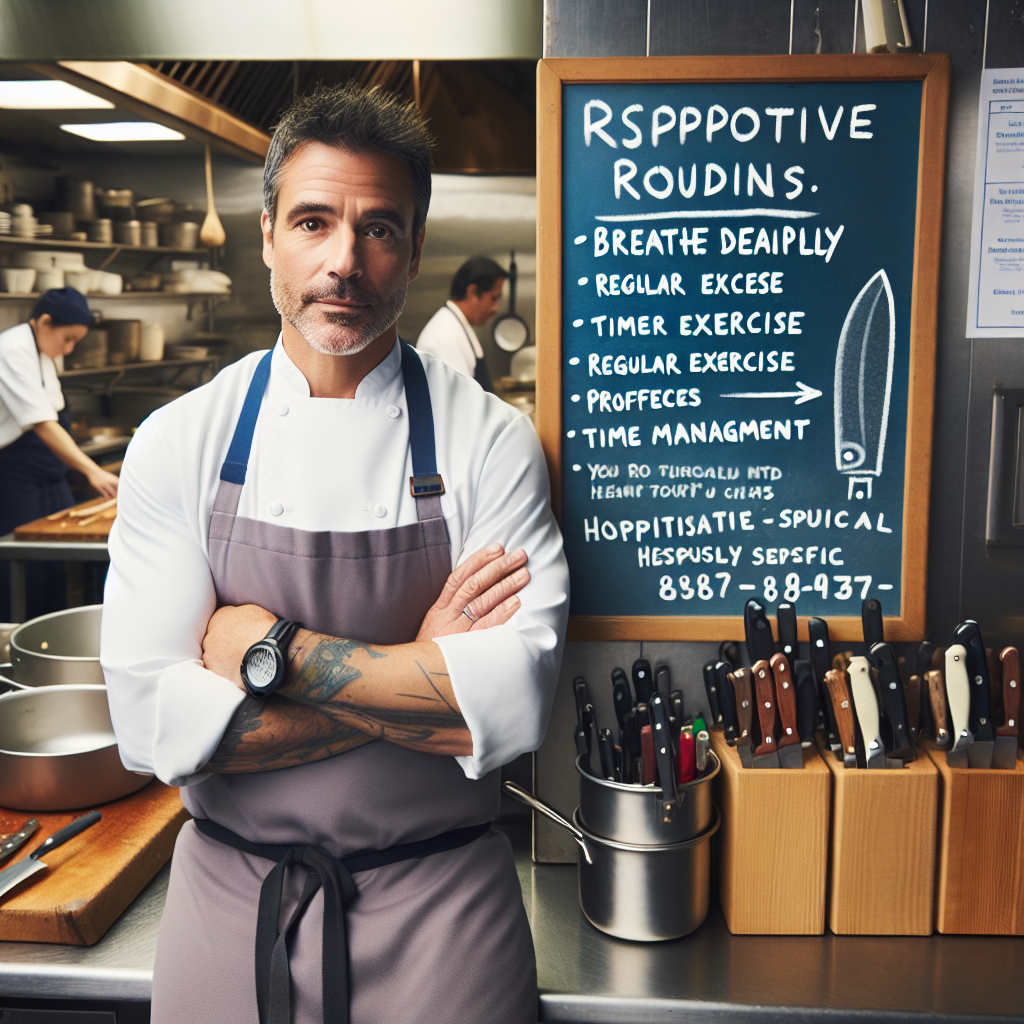
 # When the Heat Is On: Quick Mental-Health Resources and the Kitchen Community That Has Your Back
There’s a particular kind of hush right before service — pans clatter, burners come up, and everyone tightens into their groove. I’ve been on both sides of the line: the adrenaline of a full dining room and the quiet after, when the cleanup tells the real story. That tightness in your chest? It’s the same thing that turns up at home when life stacks shifts, school runs, side hustles, or tiny humans on top of one another. The good news: kitchens teach you useful tools for pressure. The better news: you don’t have to go it alone.
## Quick lifelines: who to call, text or chat
When things feel overwhelming and you need immediate support, use these fast, reliable options:
– In the U.S.: Dial or text **988**, or start a live chat at **988lifeline.org** — they’ll connect you to crisis help right away.
– Confused about local social services (housing, food, childcare, paying bills)? Call **211** to find nearby programs and referrals.
– For LGBTQ+ youth in distress: The Trevor Project offers 24/7 support at **866-488-7386** and online at **thetrevorproject.org**.
– Sexual assault resources: RAINN has a confidential helpline at **rainn.org/get-help**.
– Mental-health info and programs from a public-health perspective: check resources on the **CDC’s mental health pages**.
If you’re outside the U.S.: Canada also uses **988** and **211**; many European countries use **112** for emergencies. For international helplines, **findahelpline.com** is a good starting point to locate hotlines by country.
## Support tailored to kitchens and hospitality
Restaurants are a different beast: long hours, unpredictable tips, physical strain, and emotional labor in equal parts. Thankfully, organizations exist that get that language:
– Giving Kitchen: emergency grants, mental-health training, financial assistance when medical or family crises hit.
– The Burnt Chef Project: suicide prevention, training for hospitality teams, and certified mental-health-first-aid trainers.
– Southern Smoke: counseling and support specifically for people who work in kitchens and restaurants.
These groups are like a trusted sous: they know the tools, the workflow, and the injuries that don’t always show up on a shift report.
## How kitchen technique maps to mental health (the how and the why)
Kitchens run on systems. When we break those systems down, we find direct, practical methods you can use to manage stress.
– Mise en place (everything in its place): The physical act of prepping ingredients is a mental act too. Laying tools and ingredients out reduces decision fatigue and gives you a moment of control. At home, a five-minute “mise en place” before tackling a dinner or a stressful task can quiet the mind and set a manageable pace.
– Temperature control: Heat is literal and metaphorical. Just as you temper a sauce to avoid a broken emulsion, you temper conversations and conflicts. Slow down the language, lower the volume, and address one issue at a time. High heat for too long burns more than food.
– Taste early, taste often: Salt, acid, fat, and heat are the four pillars of balance. The same principle applies to checking in with yourself: small, frequent checks reveal when something is off before it becomes a crisis.
– Timing and rhythm: Service teaches timing — when to call the expo, when to hold an order. Use a similar rhythm with stress: short, scheduled breaks (even just two minutes to breathe or step outside) reset your headspace and prevent overwhelm.
– Communal platesmanship (communication and roles): A line works because everyone knows their station and trusts the person next to them. Build that trust off the line with simple rituals: a pre-shift team huddle, a post-shift check-in, or a buddy system for tough days.
## Practical tips you can use tomorrow
– Save lifelines to your phone: 988, 211, local EAP contacts, and the URLs for Giving Kitchen, Burnt Chef, and Southern Smoke.
– Build a two-minute ritual before service or a stressful task: check your station, breathe twice, name one positive thing, and set a priority. It’s small, but consistency compounds.
– Start a buddy system: pair up for check-ins after particularly hard shifts or during busy weeks. It’s easier to say “I’m off today — can you cover my 5?” than “I’m barely holding on.”
– Ask your manager for brief mental-health training or a dedicated time for talking about workload and safety. Training cuts stigma and gives people language to ask for help.
– Join or create a moderated online group where hospitality people can share resources, vent, or celebrate wins. Keep the rules simple: be real, be respectful.
– Consider a simple mascot or symbol for your team or group. A silly button, sticker, or logo gives people a non-threatening way to signal they need support or just a break.
## Community culture: the why behind the practice
Kitchens have always been messy, loud, and affectionate in their own way. That chaos is where real care often happens: a teammate hands you a coffee with a “you got this,” someone sneak-feeds you a fry during a lull, or the expo covers a ticket without drama. Those tiny acts create psychological safety — a place where asking for help doesn’t feel like failure.
Healthy communities set boundaries. Being “real” doesn’t mean allowing abuse. Moderation and respect keep spaces safe and make it more likely someone in crisis will reach out.
## Tiny moments that keep us human
Some things you can’t schedule: the laugh when someone mis-dices an egg (yes, it’s a thing), the quiet that follows a perfect pass to the window, the ridiculous nicknames you’ll never explain to outsiders. These are the shared memories that make the work meaningful. Keep them close — they’re part of what makes you resilient.
## Takeaway
You don’t have to carry the heat alone. Keep a few contacts and websites handy, borrow kitchen techniques to manage stress, build small rituals and buddy systems, and lean on hospitality-specific resources when you need someone who understands the grind. Small moments of levity — mascots, stories, and stolen fries — are the grease that keeps the machine running.
So here’s my final ask, in true Chef Mac fashion: what one tiny ritual will you add to your routine this week — a two-minute mise en place for your mind, a pre-shift check-in with a teammate, or maybe a silly sticker to signal you need a break? Let’s taco ’bout it and see what sticks.

