

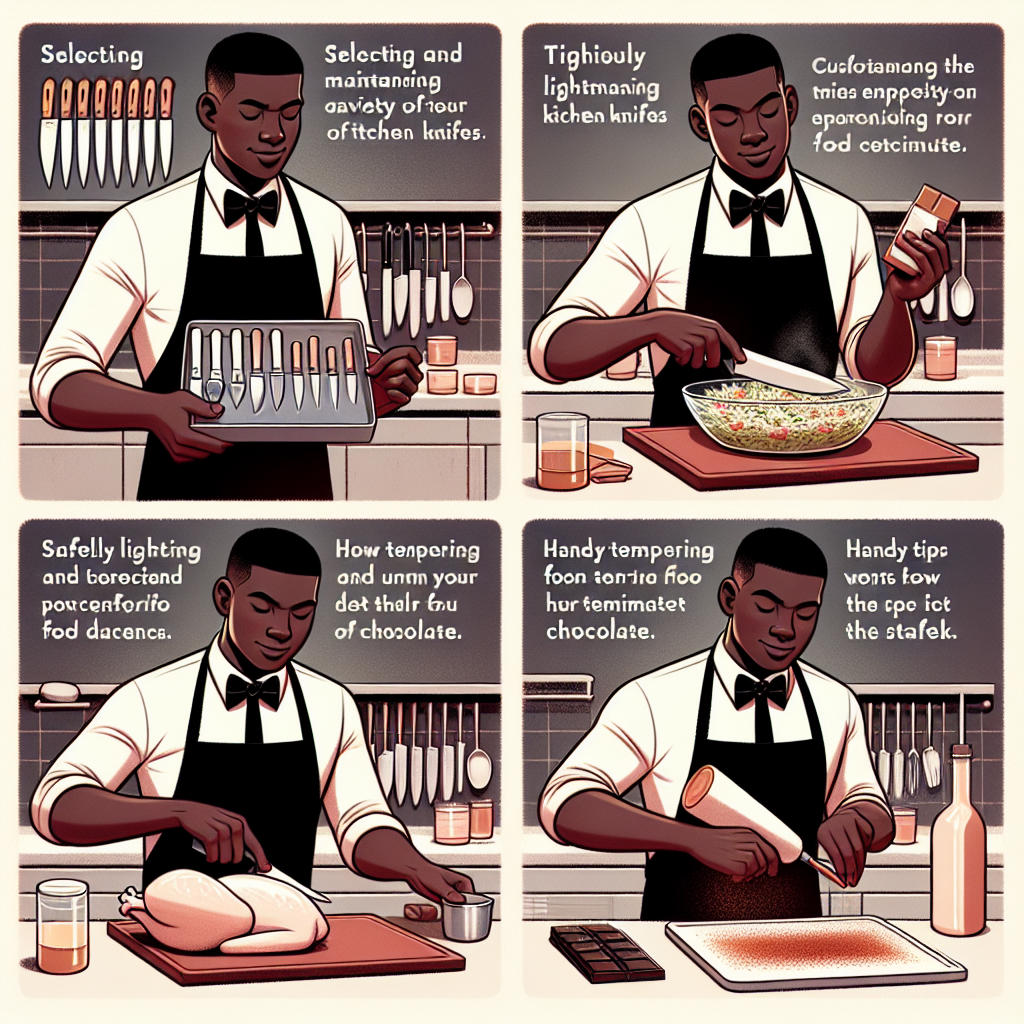
 # Kitchen Quick-Fix: Knife Love, Caesar Rescue, Turkey Tips, and Spiced Chocolate Wins
Every week the internet throws a handful of kitchen questions at us — the kind that don’t need a whole cookbook but do need a few clear, friendly answers. Whether you’re curating a small-but-mighty knife set, rescuing a too-thick Caesar, prepping a Butterball for Thanksgiving, or tempering spiced milk chocolate, these are the practical, time-saving pointers busy households actually use. Read on for short, actionable tips that will make your weeknight meals (and holiday prep) smoother.
## Knife Corner: Build a Collection That Works
I’ve worked on lines where knives flew across stations and home kitchens where people were afraid to touch anything sharper than a butter knife. The truth sits in the middle: you don’t need a museum of blades, but a few reliable pieces and proper care will change how effortless cooking feels.
– Essentials and why: an 8–10″ chef’s knife (multipurpose rocker and chop), a 3–4″ paring knife (peeling, trimming, precision), and a serrated bread/utility knife (soft crusts, tomatoes, sandwiches). These three cover the vast majority of prep work and keep you from doing weird acrobatics with the wrong blade.
– Edge care (the how and why): honing with a steel straightens the edge and should be a quick ritual before you cook — it doesn’t remove metal, it realigns the blade. True sharpening removes metal to re-create the bevel and is necessary a few times a year (or sooner if you cook a lot). A dull knife requires more force and slips — which is more dangerous than a sharp one.
– Storage and safety: protect both the blade and your hands. Use a block, magnetic strip, or in-drawer tray. Avoid tossing knives in a drawer where edges nick and accidents happen. Hand-wash and dry immediately to avoid corrosion and loosening rivets.
– Fit over flash: when you’re choosing, prioritize balance and comfort. A well-balanced knife that feels secure in your hand will make technique easier than a flashy brand name.
Quick practice tip: spend five minutes practicing simple cuts (julienne, dice, chiffonade) with a chef’s knife to build confidence — good technique beats gear every time.
## Lighten Up Your Caesar: How to Thin Without Losing Flavor
A heavy Caesar can feel cloying. The fix isn’t just adding water — it’s knowing how emulsions and flavor interact.
– Safety first: traditional Caesar uses raw egg yolk. If you’re serving vulnerable guests, use pasteurized yolks, a codded yolk (briefly plunge an egg in boiling water then cool and use the yolk), or swap to mayonnaise as your emulsifier.
– The science of thinning: an emulsion is oil droplets suspended in water-based liquid. Adding plain water loosens viscosity but also dilutes flavor. Better choices: a splash of milk or buttermilk adds body without washing out taste; sparkling water adds lift and airiness; a squeeze of lemon brightens while doing a little thinning.
– Emulsify for silk: adding oil in a thin, steady stream while whisking (or using an immersion blender) builds a stable, airy emulsion that feels lighter on the palate. If using a blender, pulse and finish with a gentle hand so you don’t overheat the dressing.
– Make-ahead wisdom: dressings often mellow in the fridge and can become looser. Taste before serving and adjust acid and salt last — acid pops flavor in a way water can’t.
Practical tweak: if your dressing is too thick, whisk in 1 tablespoon of buttermilk or milk at a time until you reach the texture you want, then taste and correct seasoning.
## Butterball and Brining: Can You Remove the Packaging?
Short answer: yes — and doing so gives you options. But keep food safety front and center.
– Read the label: if the turkey says “self-basting,” “pre-brined,” or lists added solutions, skip extra brining — you’ll over-salt. If it’s plain, you’re free to brine or spatchcock.
– Safe handling: remove the bird on a clean, easy-to-sanitize surface, discard packaging immediately, and sanitize any contact points. Keep the turkey chilled at or below 40°F (4°C) during prep.
– Brining basics: wet brine uses osmosis to move salt and flavored liquid into the meat, which helps it retain moisture when cooked. Use a non-reactive container (food-grade cooler, stainless pot, or brining bag) and keep it cool. Typical scale: about 1 cup kosher salt per gallon of water for a moderate brine, roughly 8–24 hours depending on size.
– Dry-brine alternative: generous kosher salt rubbed under the skin and across the surface, left uncovered in the refrigerator for 24–48 hours, seasons deeply and dries the skin for crispness — less fuss, less space, and excellent results.
– Spatchcocking perks: butterflying the bird and roasting flat gives even cooking and large skin surface for crispiness. Remove packaging, spatchcock, season, and don’t forget to monitor internal temps (thigh should reach 165°F/74°C).
Chef tip: let your turkey rest 20–30 minutes before carving — it helps the juices redistribute.
## Spiced Tempered Chocolate: When and How to Add Flavors
Tempering is about coaxing cocoa butter into the right crystal structure so your chocolate sets shiny and snaps. Flavors can join the party — if you introduce them in ways that respect temper and texture.
– Temper basics (quick): melt chocolate to its working temperature (dark: melt to 45–50°C / 113–122°F, cool to ~27–28°C / 80–82°F, then reheat to 31–32°C / 88–90°F; milk chocolate melts and works a few degrees lower). The goal is stable crystal form V.
– Use dry, fine spice: toast spices briefly to wake their oils, then grind finely. Moisture and large particulates can cause graininess or seize.
– Infuse a fat, not the chocolate directly: dissolve spice into a small amount of warmed cocoa butter or neutral oil, then gently incorporate that into tempered chocolate dropwise. This distributes aromatic compounds without upsetting the temper.
– Add after tempering or in fillings: the safest way is to finish tempering first, then stir in the spice extract/oil or use spiced ganache centers. For ganache, steep spices in warm cream, strain, then mix into chocolate and enrobe with tempered chocolate for filled confections.
Small-batch experiment: try 1/8 teaspoon of finely ground cinnamon per 250 g of chocolate (start small — chocolate is a sensitive partner), tasting as you go.
## Takeaway
Small, intentional tweaks make a big difference: one well-chosen knife, mindful emulsifying, safe and strategic handling of poultry, and a considered approach to spiced chocolate will lift home cooking without adding stress. The why matters: understanding the mechanics — from edge geometry to osmosis to crystal chemistry — lets you troubleshoot with confidence.
So, now it’s your turn: what tiny change will you try this week — one knife upgrade, a lighter Caesar trick, a dry-brine on your bird, or a whisper of spice in chocolate — and what do you hope it will do for your cooking? Let’s stir the pot together.

