

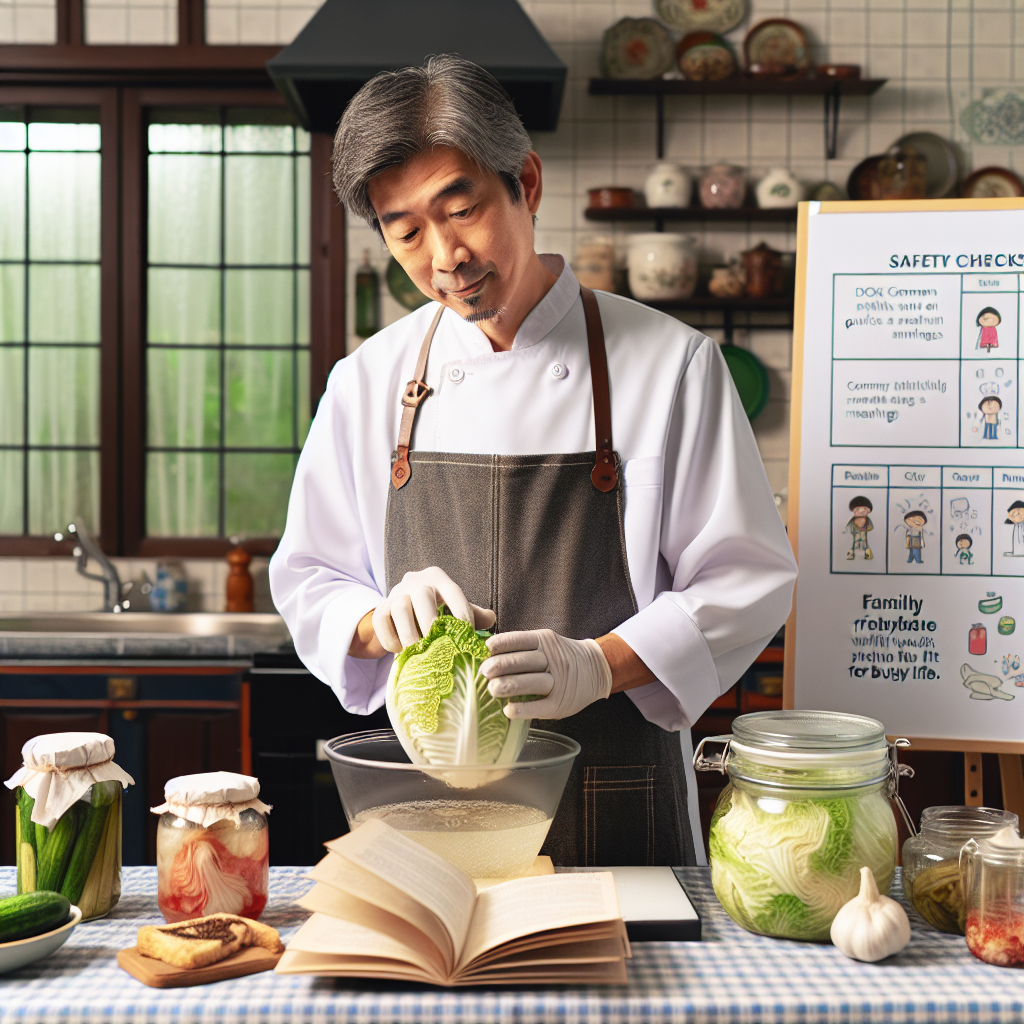
 # Ferment Without Fear — a note from Chef Mac
There’s something quietly magical about the kitchen when a jar starts to whisper with tiny bubbles. Fermenting at home turns simple vegetables and fruit into layered, savory-sour ingredients that lift weeknight meals to restaurant-level interest. But it also invites questions: is that white film okay? Why did my garlic go blue? How do I make whole cabbage leaves soft enough to stuff for sarma without a barrel?
Let’s demystify the why behind the what, so your cellar (or fridge) becomes a place of curiosity instead of panic.
## Quick safety check: decide whether to eat or toss
Ask three things: what does it smell like, what does it look and feel like, and are there colored fuzzy patches?
– Smell: Pleasantly sour, tangy, yeasty, or even a little yeasty-vinegary is fine. If it smells putrid, rotten, or overwhelmingly foul, discard.
– Look & texture: Cloudy brine, bubbles, and foam are normal signs of fermentation. A white, powdery or film-like layer is often kahm yeast — unappetizing but usually harmless; skim it off and taste below. Slimy textures can happen with warm temps or low salt; if the smell is bad, toss. If it smells fine, you can rinse, repack, and continue fermenting in a cooler spot.
– Colored fuzz: Any fuzzy, colored mold (black, green, pink, orange) is unsafe. Throw the batch away.
When in doubt, trust your nose and instincts. You eat the food — you get to decide what’s comfortable.
## Common quirks and why they happen
Understanding the science lowers the panic meter.
– Green or blue garlic: This dramatic color change comes from reactions between garlic sulfur compounds and acids or metals; it looks wild but usually tastes like garlic. It’s safe.
– Kahm yeast: A surface film from harmless yeasts. It grows when oxygen reaches the brine or when salt is low. Skim and adjust technique next time.
– Slimy vegetables: Often the result of warm temps or inadequate salt. Rinse, press back under brine, and ferment cooler.
– Pink/orange brine: This can signal unwanted bacterial growth. If non-white colors appear, err on the side of caution and discard.
## The principles that make fermentation work (the why)
Fermentation is mostly about controlling three things: salt, time/temperature, and exclusion of oxygen for certain styles.
– Salt selects. Roughly 2% salt by weight creates an environment where lactic acid bacteria (the good guys) thrive while many undesirable microbes are suppressed. Too little salt invites slime and off-flavors; too much slows things down.
– Time and temperature shape flavor. Cooler temps (60–70°F / 15–21°C) make a cleaner, slower ferment with layered acid development. Warmer conditions speed souring but can favor yeasts and softer textures.
– Submersion matters. Keep veggies under brine to discourage aerobic molds. A weight and an airlock or cloth cover are your best friends.
When you understand these levers, you can adjust intentionally instead of guessing.
## Family-friendly, low-effort ferments that actually work
Quick wins keep enthusiasm high.
– Quick pickles: Slice cucumbers or carrots, sprinkle salt, press under weight. Eat in days. Great in lunchboxes.
– Tepache: Fermented pineapple soda. Peel and core pineapple, add brown sugar and a bit of warm water, ferment 1–3 days. Dilute for kids; it’s lightly fizzy and very forgiving.
– Garlic honey: Whole garlic cloves in honey for a week. Uses honey’s natural antimicrobial properties for a mellow, sweet-savory condiment.
– Lemon shrub/lemon soda: Ferment lemon syrup and store it in the fridge — brightens drinks with a hit of acidity.
– Hot sauce mash: Blend chiles and fruit, ferment a few days, then blend and strain for a fast hot sauce.
These projects are forgiving for busy schedules and give quick sensory feedback so you learn fast.
## How to ferment a whole cabbage head (for sarma)
Whole-head fermenting is traditional for cabbage leaves used in stuffed dishes like sarma. You don’t need a barrel — just a large container, patience, and a bit of muscle.
What you need
– Whole cabbages (4–6 depending on container size)
– Non-iodized salt (sea salt or kosher), a scale is helpful
– Large food-safe container: glass, ceramic crock, or a 5-gallon food-grade bucket
– A weight (plate, clean jar, ferment weight)
– Cloth or airlock lid
Why 2% salt: Aim for about 2% salt by weight of the vegetables (around 20 g salt per 1 kg cabbage). That balance encourages lactic bacteria and keeps spoilage organisms at bay.
Steps (and why each matters)
1. Prepare the heads: Remove dirty outer leaves but keep heads intact. Coring slightly helps salt and brine penetrate without shredding the leaves — you want pliable layers for stuffing later.
2. Salt placement: Rub salt between a few outer leaves or dissolve salt in water to make a brine. Salt draws moisture out of the cabbage (osmosis) and starts the brine.
3. Pack & submerge: Tuck heads into the container, pressing down so brine covers them. Submersion prevents aerobic molds.
4. Weight & cover: Use a weight to hold everything under brine and a cloth or airlock to let gases escape but keep bugs out.
5. Ferment and check: Keep at a steady cool room temp. Check weekly, skim any kahm yeast, and keep them submerged. Texture softens in 2–6 weeks depending on taste and temperature.
6. Store: When leaves are soft enough for rolling, refrigerate or cellar to slow fermentation. Use the leaves right away for sarma or store wrapped in the brine.
Why whole-heads work: Intact heads keep layers together, reducing oxidation and giving you leaves that peel off cleanly for stuffing. The result is a lightly tangy, still-structured leaf great for rolling.
## Practical tips for busy households
– Make small jars alongside your big project so you have fast results while the slow ferment matures.
– Label jars with start dates so mystery jars don’t haunt you later.
– Use the fridge as pause button: refrigeration slows fermentation when flavor is right but dinner plans are not.
– Save successful brine for marinades or salad dressings — it’s a shortcut to umami and brightness.
## A little food history to chew on
Fermentation is one of the earliest food technologies — a global toolbox for preservation and flavor. From European sauerkrauts and Korean kimchi to Mexican tepache and West African garri, every culture adapted microbes to local ingredients and needs. When you ferment at home, you’re continuing a centuries-old conversation between people and microbes — and adding your own voice.
## Final thought from Chef Mac
Fermenting is part science, part art, and entirely approachable. Learn the key levers — salt, time, temperature, and submersion — and you’ll be able to troubleshoot calmly, not frantically. Start small, taste often, and let your kitchen teach you.
What will you ferment this week, and how might you use it to spark a new dinner idea?

