

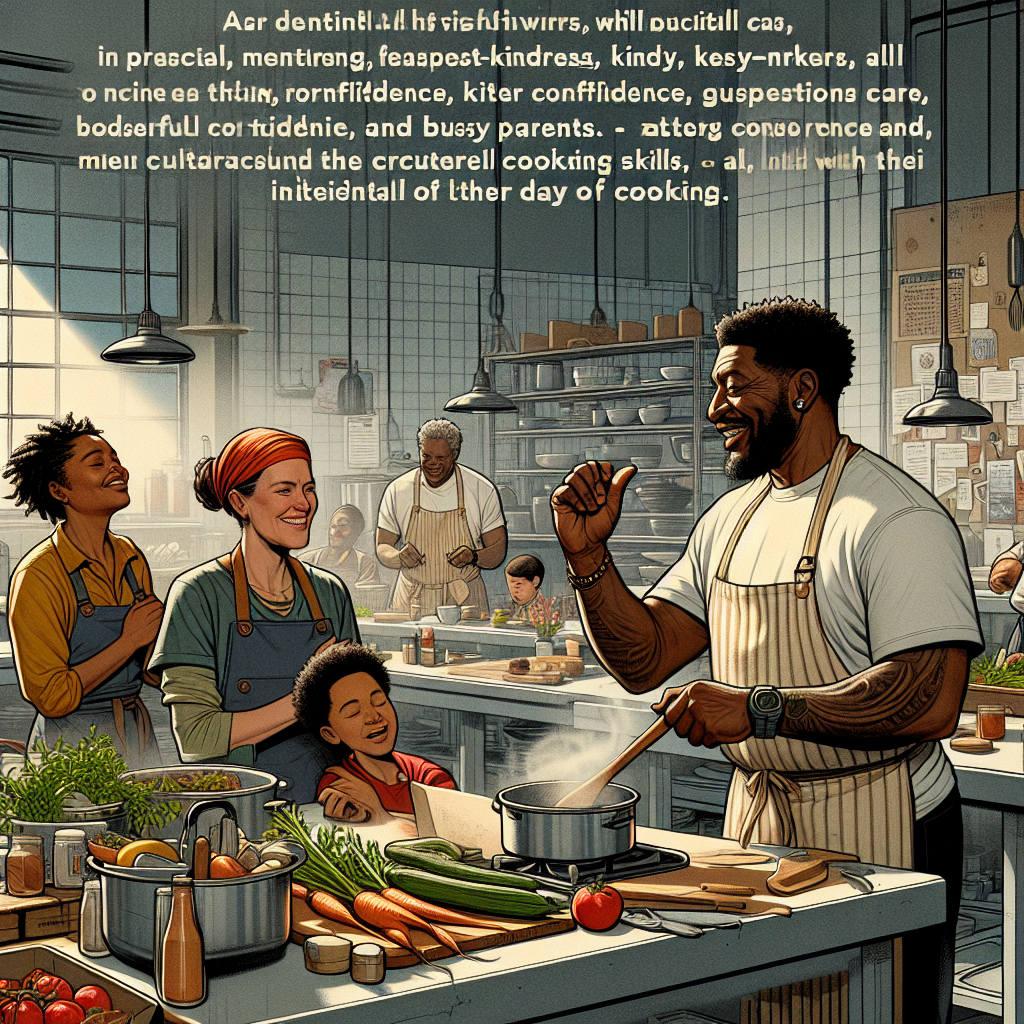
 # Stir the Pot, Not the Panic — by Chef Mac
There’s a special kind of quiet after service: plates are cleared, the burners cool, and the crew sits on crates or leaning against the pass, breathing out as one. Those post-service minutes are where the dumbest tools get roasted, the best stories are told, and sometimes the hardest things are named aloud. I’ve spent long nights watching how a joke, a quick tutorial, or a shoulder to lean on can change the tone of a whole team. Kitchens are messy, joyous, blunt, and tender — and they work best when we pair honesty with care.
Below I break down why that after-service culture matters, the practical norms that make a kitchen a true community, and the concrete cooking techniques and parenting-friendly tips that help translate restaurant wisdom into home life.
## After-service chatter: why it matters
Think of the kitchen as an unofficial community center. People swap recipes, gripe about managers, and sometimes get real about anxiety, addiction, or family stuff. That openness builds trust: if you can tell someone you messed up a dish and not be humiliated, you’ll learn faster.
But openness has to be intentional. Left unchecked, humor can become exclusionary and venting can tip into bullying. The trick is preserving space for honesty while keeping it safe.
## How to be a good kitchen neighbor
A few simple norms make that happen:
– Keep it real, not personal. Give people room to vent, but don’t turn complaints into character attacks.
– Respect boundaries. If someone says they need quiet or asks to skip a topic, listen.
– Intervene when things cross into harassment. A calm “Hey, that’s not cool” or getting a manager involved keeps the space usable.
– Celebrate the small wins. A quick “nice job” after a line cooks a steady ticket does more than any staff memo.
When these rules become muscle memory, the kitchen stays open to everyone being human.
## Quick helplines and kitchen-specific support
If you or someone you love needs help right now, please save these:
– U.S.: Call or text 988, or use the 988 Lifeline online chat.
– Local social services: dial 211 for housing, food, childcare, and employment resources.
– LGBTQ+ youth: The Trevor Project — 1-866-488-7386.
– NAMI: nami.org for resources and local chapters.
– Sexual assault: RAINN — rainn.org.
– Global: Many EU countries use 112; Canada supports 988 and 211. For international hotlines, findahelpline.com is a good directory.
Kitchen-specific groups that understand our hours and hazards:
– Giving Kitchen — emergency assistance for bills, medical needs, and team training.
– The Burnt Chef Project — mental health awareness and suicide-prevention tailored to kitchen life.
– Southern Smoke — support for chefs, cooks, and restaurant staff.
Bookmark these and consider sharing them on the back wall where your crew reads.
## Techniques and tiny lessons that travel from pro line to home table
Kitchens teach through doing. Here are practical techniques and the reasons behind them — the kind of stuff you can teach in five minutes during a lull or hand down to a kid over dinner prep.
– Mise en place (everything in its place). Why: saves time, prevents mistakes, and reduces panic during busy moments. Practice by chopping and measuring before you turn on a burner.
– Knife basics. Why: control and safety. Teach the pinch grip (thumb and forefinger on the blade), a firm non-dominant-hand “claw” to protect fingers, and practice quartering an onion slowly. Better technique means faster, safer prep.
– Heat control. Why: temperature changes flavor and texture. High heat sears and locks in juices; medium-low builds layers. Try cooking a chicken breast at medium-high to sear, then finish at medium to reach doneness without drying it out.
– Seasoning early and often. Why: salt builds flavor as proteins and vegetables release juices. Taste at several stages so you don’t overshoot at the end.
– Resting proteins. Why: it lets juices redistribute. A cut of meat benefits from 5–10 minutes of rest; a rested dish feels juicier and more composed.
– The importance of taste, not recipe worship. Why: ingredients vary. Teach kids and new cooks to taste and adjust — more acid, salt, or fat — rather than following a card like it’s law.
These are the fundamentals we lean on during a rush. They translate directly to home cooking and make teaching a child feel less like lecturing and more like showing.
## Small moments, big ripple effects
I once watched a line cook teach a teenager how to peel potatoes with a swivel peeler while telling a dumb joke. Five minutes later the kid was grinning at a bowl of perfect ribbons and carrying pride around like a hot plate. Those tiny wins matter.
If you’re juggling shifts and kids, invite them in during low-stress times. Give simple tasks: toss a salad, stir a pot, snip herbs. Safety-first: small, age-appropriate tools and clear instructions. Praise effort more than outcome — that curiosity and confidence is the meal you’re actually making.
## “Iykyk” moments and inclusive humor
Every crew has its shorthand — the late-night memes, the one-liners after an impossible service. Those in-jokes bind people, but they can also exclude. A quick habit check: if a joke relies on putting someone down, it doesn’t build team spirit. Make humor inclusive and it becomes the grease that keeps the gears moving.
## Witnessing mentorship: call it out
There’s power in being seen doing the right thing. If you notice someone quietly coaching a new cook, say it aloud. “I saw you help Mara with that pan — nice work.” Recognition reinforces repair and mentorship more than rules ever will.
## Practical application at home and in the line
– Post a short checklist where everyone sees it: mise en place, chef’s knife grip, 3 tasting points, water-safety rules for kids.
– Run a 10-minute skills session once a week: how to julienne, how to rest meat, or how to make a basic vinaigrette.
– Rotate roles: make a new cook the saucier on a quiet night so they learn finishing touches.
Small investments in skill build resilience and reduce panic — both in restaurants and in family dinners.
## Takeaway
Kitchens are more than places to cook; they’re communities where life is lived in the steam and the salt. Keep conversations open, be blunt but kind, and lean on resources when someone needs help. Little acts — teaching a kid to chop safely, sharing a hotline, stepping up when someone is berated — ripple out.
When we stir the pot, do it to blend flavor, not to whip up panic. What’s one small cooking skill you can teach someone this week — and who will you invite into the kitchen to learn it with you?

