

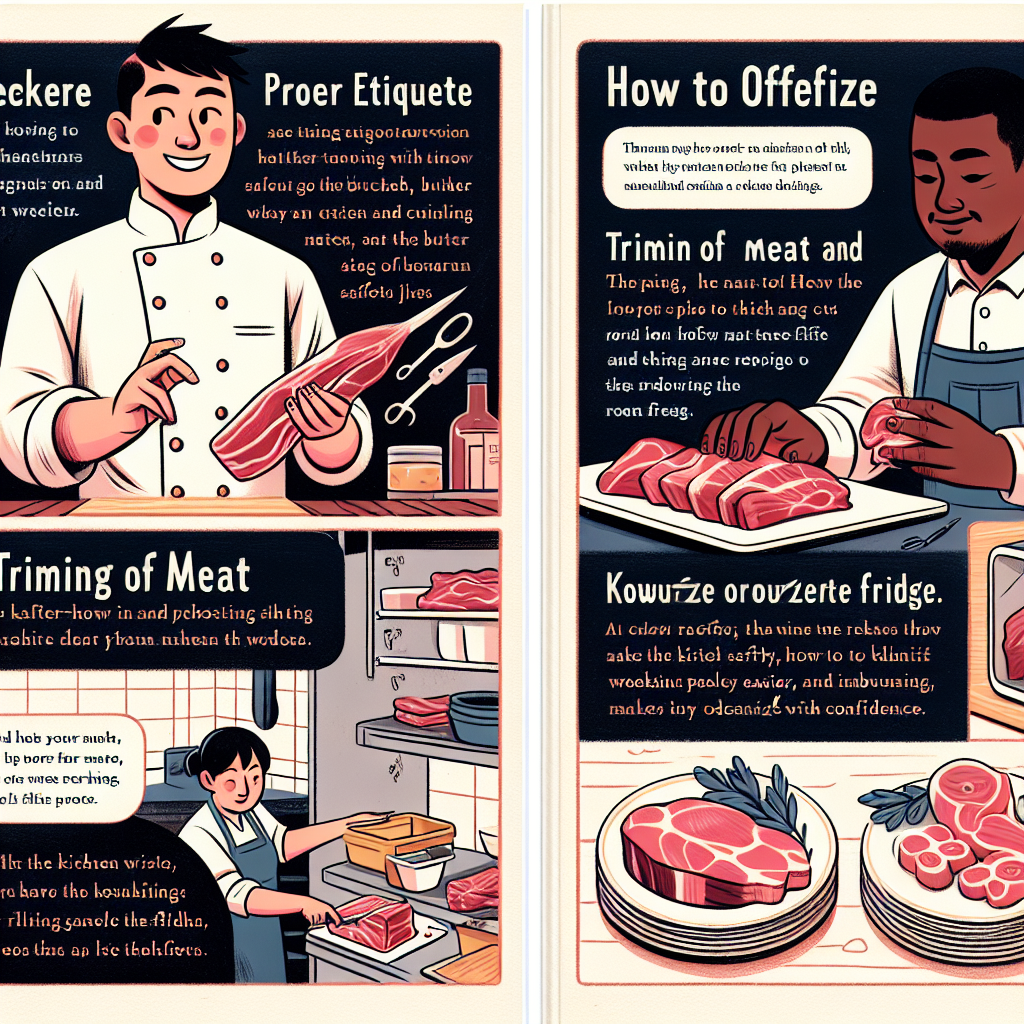
 # From Case to Kitchen: A Friendly Butcher’s Guide for Busy Families
If you’ve ever stood at the meat counter feeling unsure which roast will feed the kids for a week, or wondered whether that freezer-browned heart is still good, you’re in good company. I’m Chef Mac, and for years I’ve watched home cooks light up when someone behind the glass explains a cut or trims a roast the way they like it. This piece breaks down the why and the how — the practical skills and the kitchen logic that turn an intimidating display case into a friendly resource for busy families.
## Respect the counter: simple rules that keep things friendly
Butcher counters are tiny neighborhoods. When everyone follows a few basic courtesies, advice stays useful and people keep coming back.
– Don’t expect a definitive safety diagnosis from a photo. A picture can help, but it can’t replace purchase info, storage history, and smell/texture checks done in person.
– Ask practical prep questions. “What’s the best method to make this tender for weeknight dinners?” or “What internal temperature should I target for a roast if my kids like it medium-well?” are helpful and answerable.
– Be kind. Butchers take pride in their craft. A respectful tone opens doors to tips, special trims, and substitutions that save time and money.
Why it matters: clear, practical questions let butchers share technique and timing (the real value), not just identification. That’s where home cooks get the biggest payoff.
## Cut spotlight: boneless bottom blade roast — how to make it sing
You’ll see the boneless bottom blade roast tucked in the chuck. It’s flavorful, wallet-friendly, and perfect for family meals if you cook it for what it is.
The why: this muscle works a lot, so it has more connective tissue (collagen) than a strip or ribeye. Collagen is flavor-packed but tough unless you coax it into gelatin.
Techniques that work:
– Braise: Brown the roast for flavor, then simmer gently in aromatics and stock at low heat (simmer or 275°F oven) until fork-tender. Collagen melts into gelatin, producing a silky sauce you can spoon over mashed potatoes.
– Low-and-slow smoking or sous-vide: Long, low heat breaks collagen down without drying the meat. For smoker fans, maintain 225–250°F until tender; for sous-vide, think 135–150°F for 24–48 hours depending on texture preferences.
– Thin-slicing after rest: If you roast it, let it rest and slice thin against the grain. Thin slices shorten the chew and make every bite more tender.
Family-friendly idea: Brown the roast, add onions, carrots, and a cup of broth, then slow-cook on low for 6–8 hours. Shred for tacos, feed the family over mashed potatoes, or pack lunches for the week.
## Offal Q&A: is that frozen sheep heart safe to eat?
First — good on you for exploring offal. Organ meats are economical, nutrient-dense, and full of flavor when handled right. Here’s how to think about safety and quality.
What you might see: color changes and a little surface “bleeding” are common with frozen organs. Blood can pool before freezing and shift color. Slight freezer burn at the surface can darken edges without making the whole piece unsafe.
Red flags: a sour or rotten smell, a slimy texture, a strong ammonia-like odor, torn or compromised packaging, or a storage date that doesn’t make sense. Any of those mean don’t risk it—especially if you’re feeding kids or someone immune-compromised.
How to cook it: If the heart is from a trusted source and smells normal after thawing, cook it thoroughly. Many cooks braise or slow-simmer heart to tenderness; others slice it thin and pan-sear quickly for a steak-like result. When in doubt, err on the side of longer cooking or higher internal temp for vulnerable eaters.
Practical tip: label offal clearly when you freeze it and note the date. That saves painful guesswork later on.
## Apprentice corner: why trimming and technique matter for busy cooks
Apprentices start with the basics—trimming fat caps, packing trays, learning portion consistency—and those skills are hugely useful to shoppers. A well-trimmed roast means you don’t have to wrestle with uneven fat while you’re juggling homework and dinner.
Why it helps at home:
– Even thickness = predictable cooking times.
– Properly trimmed fat reduces flare-ups on the grill and keeps weeknight cook times reasonable.
– Consistent portions help with meal-planning and budget.
Ask your butcher to trim, tie, or portion for you. It saves time and ensures the cut behaves in the pan or oven the way you expect.
Quick chef’s trick: for steaks, ask for even thickness and a modest, even fat cap. It makes searing and resting much less stressful.
## Keeping the case — and your fridge — shipshape
A tidy display case is the same principle as a tidy fridge: visibility, rotation, and cleanliness.
– First in, first out: label and date packages so older items get used first.
– Don’t overpack: airflow matters. Give items room so the fridge stays at a safe, even temperature.
– Clean spills immediately and sanitize surfaces regularly to prevent cross-contamination.
At home, store raw meat on the lowest shelf in sealed containers. That protects ready-to-eat foods and keeps your weeknight prep simple.
## Takeaway: curiosity and clear questions are your best tools
The meat counter isn’t a test; it’s a tiny classroom. When you ask how a cut should be cooked, why a trim helps, or what to watch for with offal, you’re borrowing decades of kitchen experience and saving hours of guessing.
Techniques like braising, low-and-slow cooking, and correct trimming aren’t tricks — they’re the culinary logic that turns economical cuts into weeknight heroes. Respect for food safety, clear communication with your butcher, and a little planning turn intimidating purchases into family favorites.
So next time you’re at the case, ask your butcher one practical question: what’s the easiest way to make this cut family-friendly by dinnertime? And then try it. What underused cut will you ask about this week—and how will you cook it for your family?

