
 # Stirring the Pot with Chef Mac: Smart Shortcuts That Actually Help
Busy week, hungry family, and twenty other things on your to-do list? I get it. In a professional kitchen we call this pressure, but at home it’s life. Shortcuts aren’t about cutting corners — they’re about cutting clutter, saving flavor, and keeping cooking doable. Below I break down the technique and the reasoning so you can cook confidently, even on a tired Tuesday.
## Why shortcuts matter (beyond convenience)
A good shortcut preserves three things: flavor, safety, and dignity. Food should still taste great. You should stay safe while making it. And you should feel capable — not defeated — after you’ve cooked. That’s why the tips here are practical and principled: they use physics, food science, and a little kitchen psychology to make your life easier.
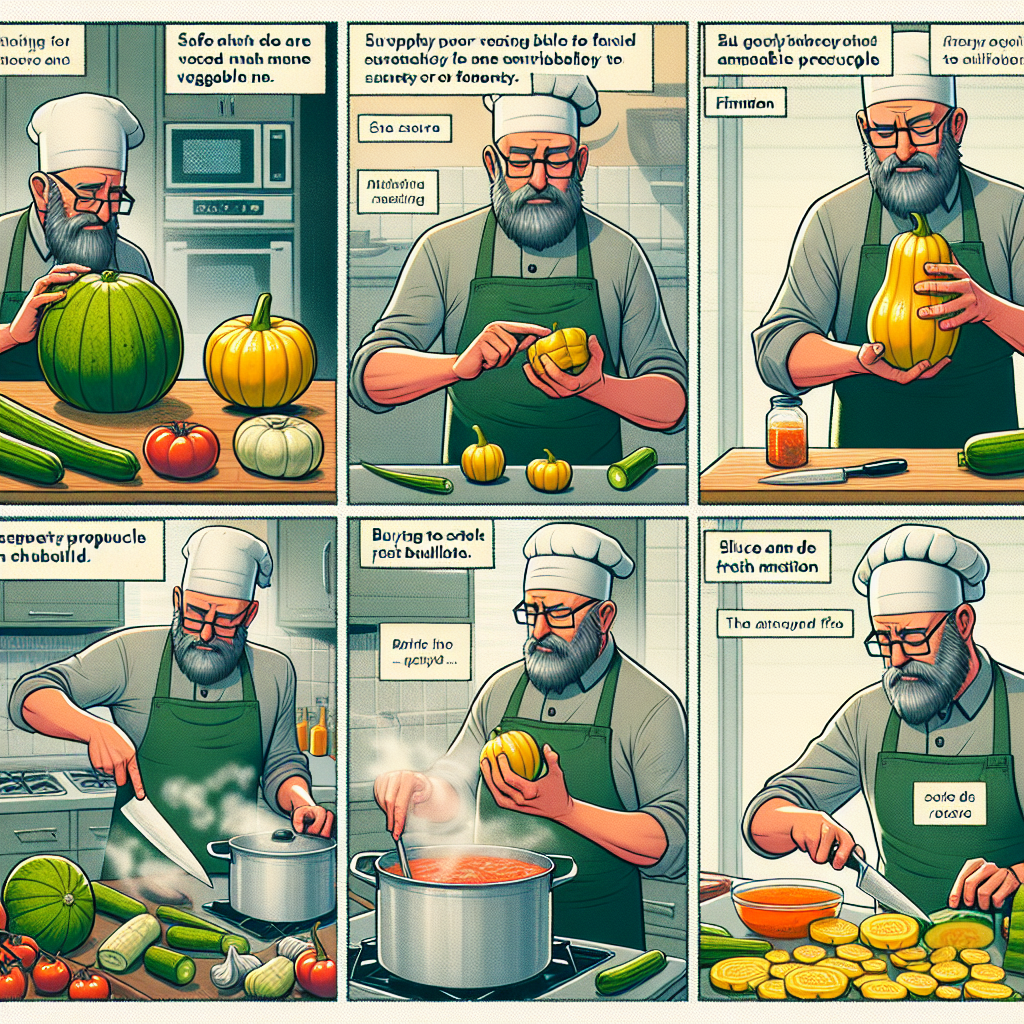
## Ripeness rules: picking squash that behaves on the stove
Summer squash (zucchini, yellow squash)
– Size matters: small-to-medium fruits are sweeter and have fewer seeds. Big zucchini can be watery and bitter.
– Skin: look for firm, glossy skin without soft spots. Softness = early spoilage.
– Weight: a solid feel means denser flesh and better texture after cooking.
Winter squash (butternut, acorn, spaghetti, kabocha)
– Rind: mature winter squash has a hard rind. If your thumbnail won’t puncture it, you’ve got maturity.
– Color: deep, even tones usually mean developed sugars; dull (not shiny) is often a good sign here.
– Stem: a dry, corky stem indicates vine maturation.
– Tap test: a hollow sound means good flesh development for roasting.
Why this matters: ripe squash reacts predictably to heat. Summer squash ages into mush if it was overgrown; winter squash with immature seeds won’t sweeten properly in the oven. Picking the right specimen saves time and preserves texture and flavor.
## Chopping without knives: safer tools when mobility is limited
If a chef’s knife feels like too much, you don’t have to surrender fresh food. These tools replicate the same principles — leverage, controlled motion, and repeatability — but with less risk.
Helpful tools and why they work
– Mezzaluna or rocker chopper: the rocking motion uses your body weight and keeps hands away from the blade.
– Food processor with pulse: pulses mimic a quick, consistent chop. Short bursts give control and avoid purée.
– Manual pull/pump choppers: great for small jobs and predictable chunk size.
– Mandoline with guard: excellent for even slices if you can safely secure the guard.
– Cut-resistant gloves + non-slip mats: friction control and a barrier make a huge difference.
Adaptive tips
– Anchor your board with a damp towel to stop sliding.
– Use a bench scraper or spatula to move food rather than fingers.
– Rest a weaker hand on a folded towel or jelly-roll pan for stability and to keep it safe.
Why the approach works: professional cooks think in motions — rock, push, pulse — not heroic single cuts. These tools let you substitute a safer, repeatable motion that produces the same result.
## Tomato bouillon: tiny cube, big flavor
Tomato bouillon is a concentrated shortcut to layered tomato flavor without the hassle of opening cans, reducing fresh tomatoes, or managing spoilage.
What it brings to the table
– Umami and acidity in a single, shelf-stable package.
– Color and tomato aroma without extra prep.
– Portability for grains, quick broths, glazes, and one-pot dishes.
Practical uses
– Dissolve in cooking water for rice or polenta to infuse tomato notes.
– Make a quick broth for soups or to deglaze a pan.
– Stir into chili or pasta sauce to deepen the tomato base.
– Mix with oil, vinegar, and spices for a fast marinade or glaze.
Why it works: bouillon concentrates what tomatoes contribute — acidity, sweetness, and glutamates. A small addition amplifies complexity the same way a splash of vinegar or a pinch of sugar balances a sauce.
## Family-friendly one-pan: chicken + rice + veggies (+ cheese!)
This meal is reliable because it leans on controlled heat, absorption, and timing — basic cooking physics.
Why it’s dependable
– Rice cooks by absorbing liquid; controlling the liquid ratio and heat gives predictable texture.
– Browning the chicken first adds Maillard flavor that transfers into the rice.
– A single pan minimizes heat loss and preserves aromatics.
Chef Mac’s quick method
1. Sauté aromatics (onion, garlic) in oil to start building flavor.
2. Brown seasoned chicken briefly for color and flavor.
3. Add rice and veggies to toast the grains and coat them in fat for better texture.
4. Pour in tomato bouillon dissolved in water/stock, bring to a simmer, cover, and let the rice absorb the liquid.
5. Finish with cheese to add richness and bind everything together.
Pro tip: use a tight-fitting lid and moderate heat. Too hot and the rice scorches; too cool and it won’t cook evenly.
## Buy smart, save more: the slice-and-freeze trick
The slice-and-freeze trick is the epitome of pantry economy — buying time as much as buying food.
How to do it safely
– Buy discounted packs that still look fresh and check the best-before date.
– Slice into portions while fresh; flash-freeze on a sheet for an hour or two.
– Transfer to labeled bags, remove excess air, and freeze flat.
– Thaw in the fridge and cook promptly; vacuum sealing extends quality.
Why it’s smart: flash-freezing prevents pieces from clumping and makes portioning effortless. You transform a bulk impulse into ready-made meals.
## Small techniques, big differences
A lot of what I teach young cooks is about managing time and energy. Choose tools that fit your body and your schedule. Use concentrated pantry items like tomato bouillon to layer flavor in seconds. Buy smart and portion early to make weekday cooking frictionless.
Cooking isn’t a race; it’s a set of decisions. Make the ones that save you time without stealing joy. Try one of these shortcuts this week — which one will you test first, and how will you tweak it to fit your kitchen rhythm?

