

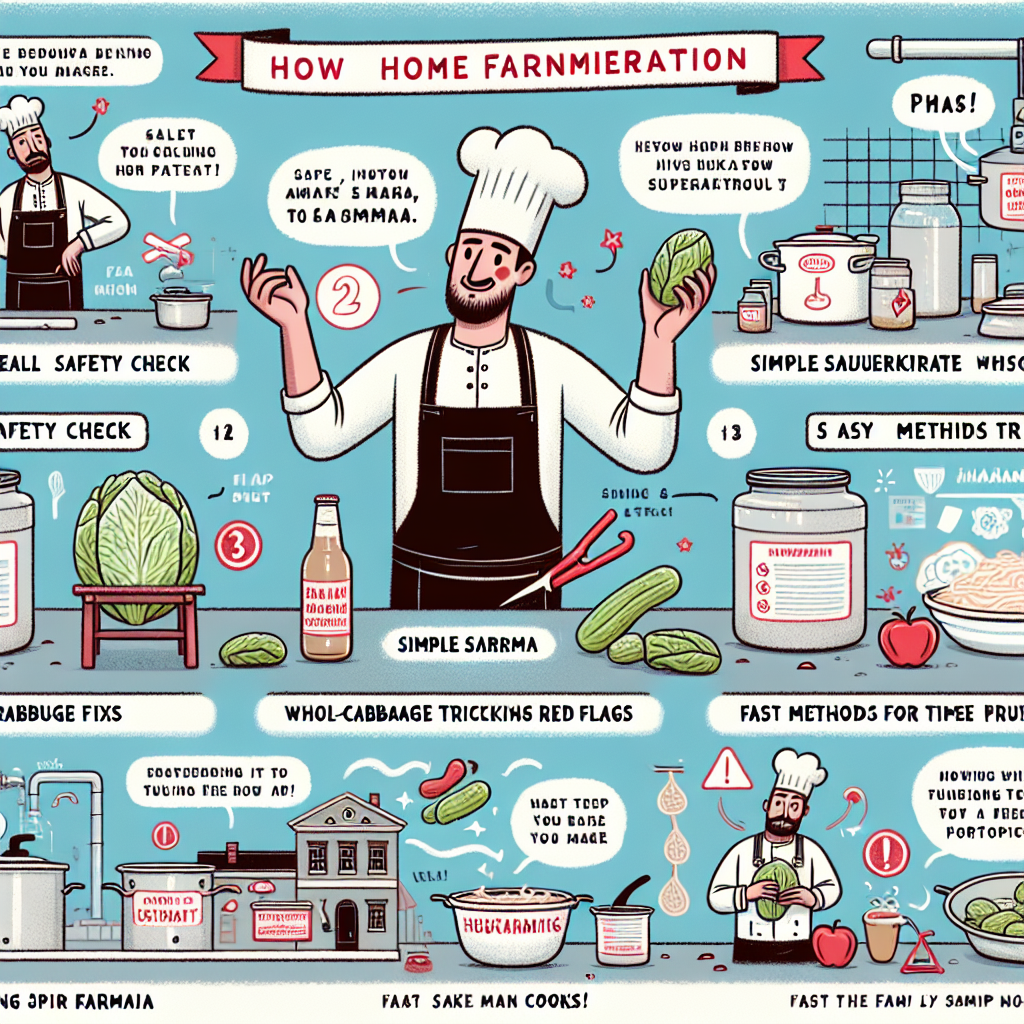
 # Ferment Fearlessly with Chef Mac
Fermenting at home is one of those hands-on hobbies that feels both cozy and a little wild. You shred a head of cabbage, add a pinch of salt, and a few days later your fridge smells tangy and comforting. For busy families, though, that wildness can translate into worry: green garlic, a strange film, or instructions calling for a wooden barrel can all feel like obstacles. Let’s break down the how and the why so you can ferment with confidence—and have fun doing it.
## A quick safety checklist: look, sniff, decide
– Good signs: a clean, pleasantly sour aroma; gentle bubbling on day 1–5 for some recipes; and textures that are crisp or pleasantly softened depending on the ferment. These are the hallmarks of healthy lactic acid fermentation.
– Not-so-good signs: fuzzy, colorful patches (green, black, pink) on the surface are likely mold—toss the batch. A rotten, putrid smell or slime distributed through the ferment is an automatic discard.
– Likely okay (but annoying): a thin white film called kahm yeast. It’s not usually dangerous but can give off off flavors. Skim it, taste the ferment, and decide if you want to keep it.
– When in doubt, toss. Ask a friend or a community, share photos and details, but you’re the one eating it—don’t gamble.
Why this matters: fermentation is about encouraging beneficial lactic acid bacteria and excluding oxygen-loving spoilage organisms. Smell and surface appearance are your quickest, most reliable tools for checking whether the right microbes won.
## The science in plain terms: why salt, pressure, and time work
Fermentation isn’t kitchen magic—it’s microbial ecology. You create conditions that favor lactic acid bacteria (Lactobacillus and friends): a salty environment, limited oxygen, and temperatures that allow them to multiply faster than unwanted microbes. Those bacteria convert sugars into lactic acid, which lowers the pH and preserves the food while building complex, tangy flavors.
– Salt: slows bad bacteria and draws water out of vegetables to form brine. The common target is 1–2% salt by weight; many home cooks use roughly 1 tablespoon of salt per medium cabbage as a simple rule.
– Submersion & pressure: keep the vegetables under brine to prevent mold and aerobic spoilage. Weights and tightly packed jars are your friends.
– Time & temperature: warmer = faster fermentation, cooler = slower. Room temperature (65–75°F / 18–24°C) is a reliable starting point for quick kraut. Refrigeration slows activity and gives you more control.
## Why garlic turns green (and still behaves)
Green or blue garlic is visually dramatic but usually harmless. Natural sulfur compounds in garlic react with acids, trace metals, or enzymes to create pigments. That color shift can happen during fermentation, when jars heat in a pan, or when garlic meets vinegar. If the aroma is normal and there’s no fuzzy mold or sliminess, the garlic is safe—just less pretty. If it smells rotten, toss it.
## Whole cabbage, sauerkraut, and sarma—practical, family-friendly tips
Traditional whole-cabbage ferments are stunning for stuffed cabbage (sarma), but you don’t need a cooper’s barrel to get authentic results.
– Containers: use a clean food-grade plastic bucket, a large glass crock, or wide-mouthed jars. Sanitize with hot water and a scrub—no bleach taste.
– Packing whole heads: press leaves down, layer salt between leaves, and use a weight (a small plate with a jar on top, a sanitized ferment weight, or a clean rock wrapped in plastic) to keep the cabbage submerged.
– If space is tight: ferment whole leaves or halved cabbages in large jars. Pack leaves with salt, press until juices appear, and stack into jars with weights.
– Salt math: if you want precision, weigh your cabbage and use 1–2% salt by weight (for 1 kg cabbage, use 10–20 g salt). For casual cooks, 1 tablespoon salt per medium cabbage gets you close.
– Massage or pound the cabbage to release liquid and create a natural brine—oxygen is the enemy here, so get the veg submerged.
## Fast lanes for time-poor fermenters
– Quick kraut: shred, salt, massage until it weeps, pack tightly, weigh down, and taste after 3–7 days. When it’s tangy enough, chill it.
– Fridge ferments: put the whole jar in the refrigerator. Activity slows and you can leave it for weeks while flavors develop slowly.
– Right tools: a jar with an airlock lid or a simple fermentation screw-top with a weight reduces spills and odd smells. Reusable silicone bags are great for pressing and storing.
– Small batches: faster, less waste, and perfect for flavor experiments without committing a whole cabbage.
## Creative, family-friendly projects to try
– Tepache: pineapple rinds, a little sugar, and spices. Fruity, fizzy, and ready in 24–48 hours—kids love the smell and the bubbles.
– Garlic honey: whole garlic cloves submerged in local honey mellow into a sweet-savory paste for dressings or toast.
– Quick pickles: cucumbers, carrots, or green beans sliced, salted, and pressed into jars. Taste in a few days.
– Fruit ferments: watermelon rind kimchi or mango hot sauce—use seasonal produce to keep meals exciting.
These projects are forgiving and easy to adjust for little palates or adventurous adults.
## Troubleshooting and how to get help
When something seems off, take clear photos and note: ingredient list, salt used, temperature, how long it’s been fermenting, and smell/texture. Post in a community or ask a friend. For immediate decisions: mold or putrid odors = compost it; kahm yeast = skim and taste; colorful garlic = probably fine. Trust your nose.
## Why cultures kept ferments around the world
Fermentation is preservation, flavor, and culture. Sauerkraut in Germany and Eastern Europe, kimchi in Korea, curtido in Central America, and tepache or pulque in Mexico each reflect local ingredients and preservation wisdom. These techniques evolved to stretch harvests and create reliable flavors—and today they bring complexity to the modern kitchen with minimal cost.
## Takeaway
Fermenting is an accessible, joyful way to stretch groceries and build flavor. With a few safety checks, an understanding of salt and submersion, and small-batch thinking, you can experiment without fear. Keep your nose as your primary tool: if it smells fresh and tangy, you’re probably on the right track. If it looks wrong, be brave—toss it and try again. Fermentation rewards curiosity.
What will you ferment this week—and how will you make it your own?

