
 # Weeknight Fancy: How to Turn Restaurant-Style Plates into Family-Friendly Meals (and Share Them Right)
Who says beautiful, layered plates belong only to long-service restaurants or weekend fuss? I’m Chef Mac, and I want to convince you that the principles restaurants use to build flavor and visual balance are doable on a weeknight — even with kids, deadlines, or a tiny kitchen. The trick isn’t technique theater; it’s breaking dishes into manageable parts, leaning on a few key methods, and making smart swaps so flavor stays big without the time cost.
## Quick guide to elevated weeknight cooking
– Prep in parts: roast veg, make a sauce, or quick-pickle one element ahead. These keep well and let you assemble, not build, at dinner time.
– Swap smartly: don’t chase rare ingredients — match texture and flavor instead (e.g., pork shoulder for Iberico presa; lemon + lime for yuzu).
– Use common tools: spoons, ramekins, a blender or fork, and a cheap squeeze bottle will get you professional-looking results.
– Think about palates: serve acidic or spicy elements on the side for kids or sensitive eaters.
Why this works: restaurants layer contrast — crunchy, soft, bright, rich — so every bite has tension and payoff. You can recreate that at home by prepping components that deliver those textures and flavors separately.
—
## Technique breakdown: what chefs do and why it matters
1. Render and crisp (duck skin, seared steaks)
Why: Rendering is about transforming tough fat into liquid richness and a crisp shell. That Maillard crust is flavor — the brown, nutty, caramel notes we crave.
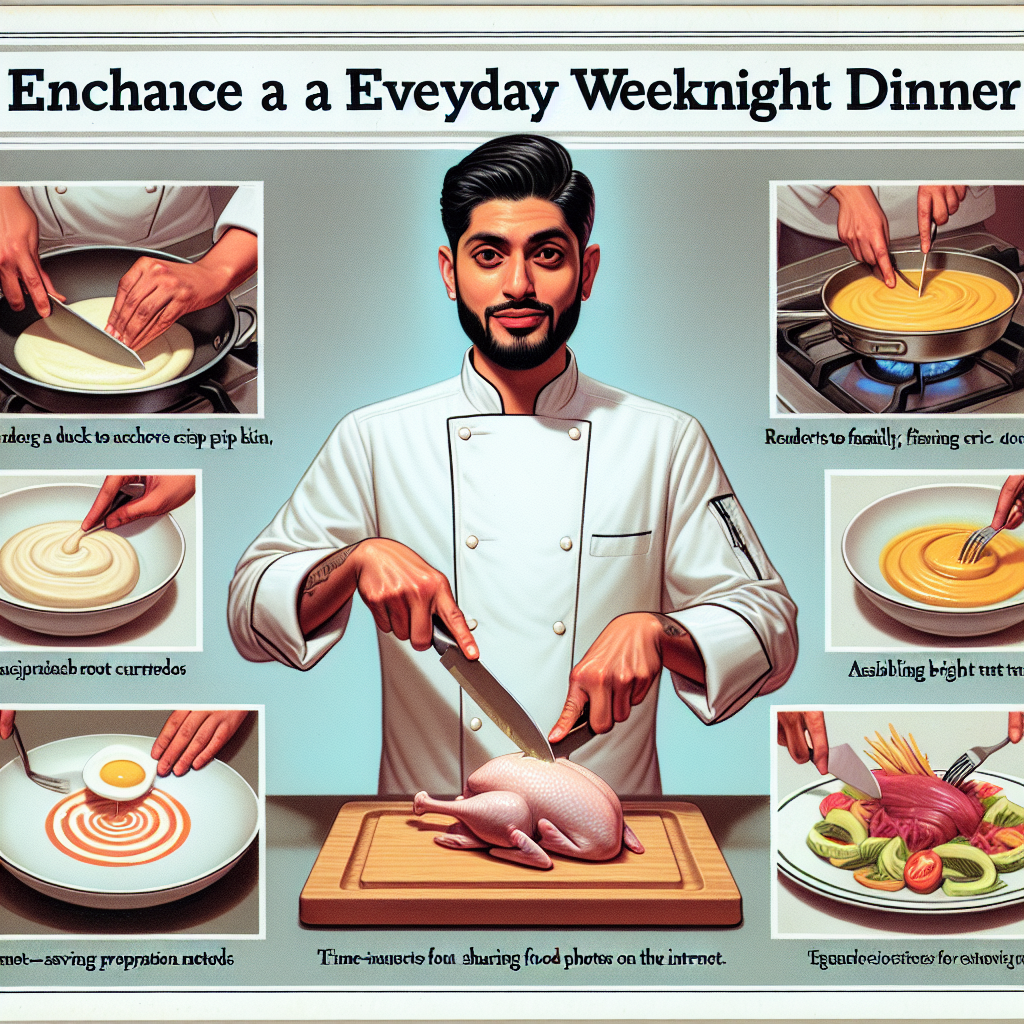
How: Score the duck skin lightly (shallow diagonal cuts), salt to draw moisture, then sear skin-side down in a cold pan over medium heat so fat slowly renders. Finish in a hot oven to bring the meat to your preferred doneness. For steaks, a hot pan and a dry surface (pat it dry) create the same Maillard reaction; rest at least 5–10 minutes so juices redistribute.
2. Emulsify for silkiness (brown butter purees, chimichurri)
Why: Emulsions bind fat and water to make mouth-coating sauces. Brown butter adds toasted, nutty depth; pureed squash with butter becomes lush and comforting.
How: Roast squash until very soft, then blend with brown butter and a splash of stock or milk to loosen. For chimichurri, chop herbs and garlic, and whisk with vinegar and oil — tiny bubbles and a gentle whisk help the sauce bind.
3. Acid balance and quick pickles
Why: Acid cuts fat, refreshes the palate, and lifts flavors.
How: Quick pickles are fast — slice thin, cover with a mix of vinegar, water, a little sugar, and salt (a basic starting ratio is 1 cup vinegar : 1 cup water : 1–2 tablespoons sugar : 1 teaspoon salt). Let sit 30 minutes to an hour, or refrigerate overnight for more depth.
4. Raw vs. cooked: texture and safety
Why: Raw (like crudo) gives a clean, bright texture and lets fresh ingredients sing. Cooked components add caramelization and comfort.
How: If raw seafood worries you with kids, swap in seared shrimp or very thin cucumber slices dressed in the same sauce — you keep the flavor idea while managing safety.
—
## Applying the techniques: five chef-inspired weeknight plates (short and sweet)
### Walnut-Crusted Duck (simplified)
– Technique notes: score and render skin; pulse walnuts + panko + thyme for an easy crust and press on briefly under heat.
– Why it sings: crunchy nut contrasts juicy meat; pickles and sautéed apples add acid and sweetness.
– Family tweak: slice on a shared board so everyone serves themselves, and offer pickles/apples on the side.
### Scallop Crudo with Yuzu-Mirin Vibes
– Technique notes: thinly slice scallops and dress right before serving to keep texture pristine. If yuzu is unavailable, mix equal lemon and lime with a splash of rice vinegar and mirin.
– Why it sings: acid and sweet umami brighten the sea flavor without heavy cooking.
– Family tweak: sub seared shrimp or cucumber for a safe, similar mouthfeel.
### Strip Steak with Browned-Butter Squash Puree & Chimichurri
– Technique notes: rub steak with smoked paprika if you can’t smoke it; sear hot and rest. Roast squash, brown the butter for nuttiness, blend until silky.
– Why it sings: smoky, fatty steak plus sweet, silky puree and the herb punch of chimichurri balances everything.
– Family tweak: keep puree and steak separate for kids who prefer plain components.
### Iberico-Style Pork with Romesco & Pumpkin
– Technique notes: sear a well-marbled pork chop, finish in the oven; blend toasted almonds, roasted peppers, garlic, and sherry vinegar for quick romesco.
– Why it sings: the romesco brings savory, nutty depth; pumpkin adds sweetness and a smooth base.
– Family tweak: persimmon jam or a fruit chutney on the side is fun for kids to spoon on rolls.
### Plating for Non-Pros
– Spoon sauces with a steady hand or use a squeeze bottle for cleaner lines.
– Use negative space: stacked elements or a deliberate smear looks intentional, not crowded.
– Garnish sparingly: one herb sprig, a bit of citrus zest, or a few microgreens finishes a plate.
—
## Cultural context: why restaurant plating made its way into home kitchens
Plating became democratized as chefs pushed seasonal, ingredient-driven cooking and as home cooks watched via TV, blogs, and social media. People want the multisensory experience restaurants deliver — the aroma, the texture contrasts, the visual storytelling. The flip side: social media also encourages perfectionism. My advice: focus on balance and flavor first; the pretty picture will follow. And remember, accessible food culture is about sharing skills, not gatekeeping them.
## A tiny etiquette PSA about sharing your plates online
Before you post that gorgeous plate, take three seconds to scan the community rules: clear titles, no personal or location info, and follow content guidelines. That quick check prevents your post from being removed and keeps the space welcoming for everyone.
—
## Takeaway from Chef Mac
Restaurant-level plating is less about gadgets and more about choices: render fat properly, balance acid and richness, build texture contrast, and prep components in advance. When you understand the why behind a technique, you can stretch a recipe into many weeknight-friendly directions.
So here’s my question to you (because I want to see what you do): which technique will you try this week — scoring and searing for a crisp skin, making a silky brown-butter puree, or quick-pickling something bright — and what swap will make it family-friendly at your table? Let’s taco ’bout it.

