

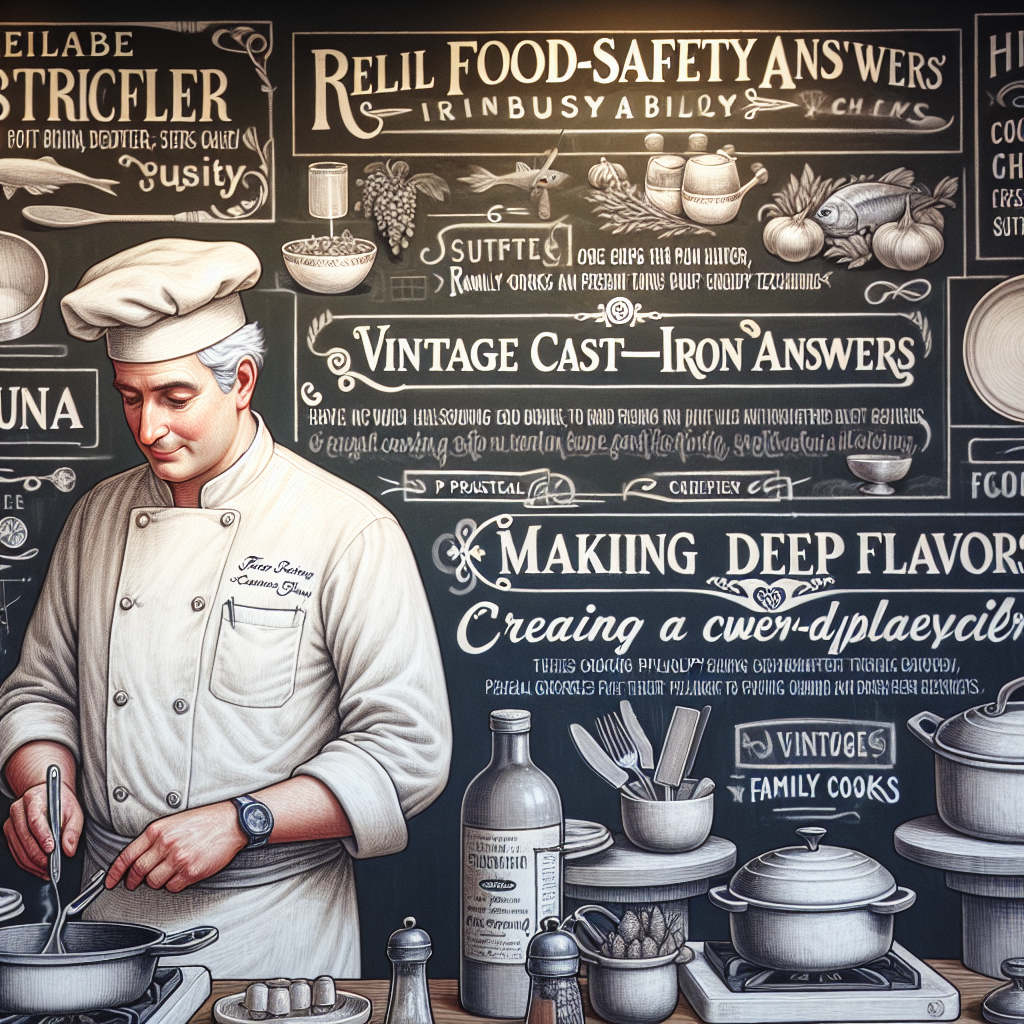
 # Kitchen Crowdsource: Smart Safety, Cast-Iron Choices, Flavor Tricks & How to Rescue Bad Fish
Community cooking spaces — whether a busy forum thread, a neighborhood recipe swap, or the back of your pantry — are rich with practical fixes. This week, the best tips I keep coming back to cover safety, skillets, flavor-building without jars of powders, and a clever way to salvage tuna that needs some love. Let’s unpack the techniques and the reasons they work, so you can use them right away.
## Ask the right food-safety questions (and where to find answers)
We all juggle dinners, leftovers, and that one mystery package in the fridge. The simplest rule: trust authoritative sources when it matters. Government food-safety pages, university extension sites, and established food-preservation resources give clear, tested guidance on temperatures, storage times, and reheating.
Why it matters: food safety is science, not folklore. Anecdotes can be helpful for tricks, but not for whether chicken is safe to eat. When you ask or answer on social media, look for responses that cite a source or explain the mechanism (for example, why 165F is recommended for reheating poultry).
Quick practical moves:
– Bookmark one reliable page (USDA, FDA, or your local extension). Check it when in doubt.
– Keep a small fridge chart on the door for common items: cooked meat, seafood, dairy, and prepared salads.
– When helping others online, be kind and say “I think so, but double-check X source” rather than asserting uncertain facts.
## Cast iron: vintage heirloom or new budget workhorse?
Cast iron sparks nostalgia and debate. Now, the practical answer for most families: buy what you can care for and use.
The why behind performance:
– Heat retention and the Maillard reaction are the meat of cast iron’s appeal. A heavy pan holds heat and gives you that deep, even sear.
– Finish and pour lines on vintage pans can change how a pan behaves, but the cooking fundamentals are the same: mass plus seasoning.
Which to choose:
– Budget daily driver: modern Lodge pans are affordable and reliable. They perform well for searing, frying, and baking.
– Vintage pieces: nice if you like the look or the hunt. Expect to refurbish and be patient with seasoning.
– High-end brands: smoother finishes and design tweaks, but not essential for solid weeknight cooking.
Care, not brand, is the gating factor. Don’t shock a blistering-hot pan with cold water; instead let it cool slightly, scrub with salt or a stiff brush, dry thoroughly over low heat, and rub with a light oil to protect the seasoning. A well-tended mid-priced skillet will outlast fads.
## Build big flavor without relying on powdered spices
There’s an easy trap: more spice jars = more flavor. But depth comes from caramelization, aromatics, fermented condiments, and technique.
The principles:
– Aromatics (garlic, onion, scallion, ginger) release volatile oils when softened or browned; those oils perfume a dish more effectively than dry powders.
– Browning and the Maillard reaction create new savory compounds; deglazing lifts those into a sauce.
– Fermented condiments (miso, soy, fish sauce, vinegars) add umami and acidity that balance and deepen flavors.
Practical pantry swaps and habits:
– Keep a jar of garlic confit or toasted onion oil for 30-second flavor boosts.
– Toast whole seeds (cumin, coriander) and grind them fresh for brighter aroma than pre-ground jars.
– Use a splash of acid at the end (vinegar, lemon) to awaken a dish that tastes flat.
A simple method: brown your protein, remove it, add aromatics to the hot pan, deglaze with wine or vinegar and a spoonful of miso or soy, reduce lightly, return protein and finish with butter or oil. Technique turns simple ingredients into something complex.
## Turning imperfect fish into a crowd-pleaser
This is the community gem I love: a quick rescue plan for awkward tuna or any underwhelming protein. The approach is fast, forgiving, and rooted in why flavors stick.
Why it works:
– Thin slices take less time to cook and absorb marinades quickly.
– A sweet-savory marinade encourages caramelization and masks slight texture issues.
– High, fast heat seals the surface, creating contrast that distracts from any interior imperfections.
A reliable weeknight rescue technique:
1. Slice thin across the grain into 1/4-inch strips. Less time, more surface area.
2. Marinate briefly (15–30 minutes) in a mix: 3 tablespoons soy, 1 tablespoon brown sugar or honey, 1 teaspoon toasted sesame oil, 1 clove grated garlic, a splash of rice vinegar. The sugar helps caramelize; the acid brightens.
3. Heat a pan or grill until very hot. Wipe excess marinade so it doesn’t steam.
4. Sear quickly: 30–45 seconds per side for thin tuna, slightly longer if the pieces are thicker. You want a crisp, caramelized exterior and a tender inside.
5. Finish with flaky salt, chopped scallions, and a squeeze of citrus.
Tools that make life easier: skewers, a grill basket, or a cast-iron skillet. Serve on lettuce leaves, over rice, or as part of a mixed board with pickles to add acidity and interest.
## Share, promote, and participate—do it well
If you make kitchen content, give value up front. Full recipes, clear steps, photos of tricky moments, and substitute options make your posts actually useful. If you’re in a forum, respect the rules about promotion and focus first on answering questions.
The community thrives on generosity: give troubleshooting tips, explain the why, and people will come back.
## Quick checklist (Chef Mac’s cheat sheet)
– When in doubt about safety, consult an authoritative source.
– A well-cared-for mid-priced cast-iron skillet will handle most home-cooking tasks.
– Use aromatics, browning, deglazing, and fermented condiments to build depth without powder.
– Thin slices + short marination + furious heat = a fast rescue for imperfect fish.
– Share full recipes, clear notes, and be generous in community spaces.
There’s a particular joy when a short thread or a neighborly tip saves dinner. Keep experimenting, ask smart questions, and pass on what works; kitchen wisdom multiplies. What small technique or pantry habit are you planning to try this week to upgrade dinner without adding stress?

