
 # Holiday Cooking Without the Panic: Simple, Party-Ready Recipes for Busy Families
By Chef Mac — Stirring the Pot
Holiday kitchens are a theater of scent and motion: the faint perfume of roasting meat, a pan of butter sizzling with garlic, the comforting thump of a wooden spoon on a heavy pot. But for many families the same scene includes a scavenger hunt for a missing roasting pan and last-minute calls asking, “Do you have any dessert?”
If that sounds familiar, breathe easy. Holiday cooking works best when you trade frantic multitasking for a few solid principles. Below I unpack the techniques and the reasoning behind them so you can deliver big flavor with small stress.
## Why simplify? The cultural logic of holiday food
Holidays are less about culinary perfection and more about ritual and care. Across cuisines, celebratory meals share the same goal: to gather people with food that’s generous, familiar, and easy to share. That’s why guests forgive a slightly overdone green bean if the main dish is soulful and the table is full of warmth.
Professionals in test kitchens echo this. They spend seasons refining a handful of dependable approaches—braises that deepen overnight, sauces that improve with a day to rest, and roll recipes that never disappoint. The cultural currency here is comfort and abundance, not technique showmanship.
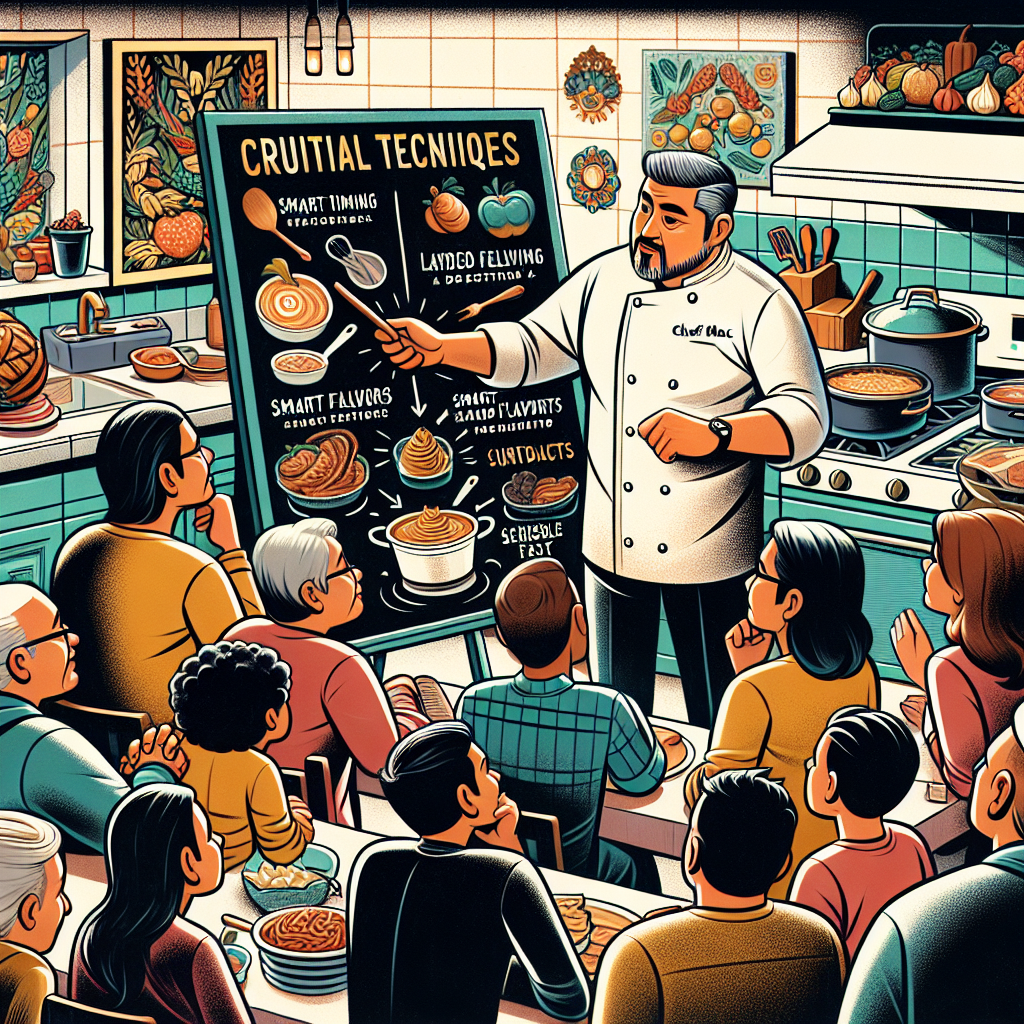
## Technique first: the small moves that make a big difference
Here are the core methods I rely on every holiday. They’re simple, sensory, and rooted in physics and flavor chemistry.
– Browning for flavor: Maillard reaction is chef-speak for the toasty, savory notes you get when protein or vegetables brown. Brown meat in batches so the pan isn’t crowded—crowding steams, browning doesn’t. That brown bits (the fond) are flavor gold; deglaze the pan with wine or stock to lift them into a sauce.
– Layering liquids: A braise is not just water + meat. Use a combination of wine (acidity and fruit), stock (umami and depth), and aromatics. Each addition plays a role: wine brightens, stock grounds, and a long, gentle simmer melds them.
– Mise-en-place and trimming: Do the small prep chores ahead—peeling pearl onions, chopping carrots, or measuring spices. That tiny investment saves time and stress when things get busy.
– Carryover heat and resting: Large roasts continue to cook after they come out of the oven. Pull meat a few degrees shy of the final temperature and let it rest; juices redistribute and the texture improves.
– Emulsions and finishing: A pat of butter whisked into a sauce at the end, or a quick emulsified vinaigrette, brightens flavors and provides a silky mouthfeel. These final touches are quick and high-impact.
## Practical permutations: make-ahead strategies and smart shortcuts
– Cook the night before: Stews, braises, and many gravies taste better after a night in the fridge—the flavors settle and the fat can be skimmed for a cleaner sauce.
– Use quality shortcuts: Good premade dough, boxed brownie mix for brookies, or a rotisserie chicken free up time for the things that matter. Shortcuts aren’t cheating; they’re ingredient-level triage.
– Stagger oven use: Plan your oven schedule so items that reheat well go first. Roast the beef or braise early, keep warm in a low oven (200–250°F / 95–120°C), then finish rolls and quick casseroles later.
– Delegate micro-tasks: Assign one person to toast nuts, another to arrange the drink station. Small, well-defined roles keep the host from becoming a short-order cook.
## Example: a compact holiday menu and timeline
Menu: Beef Bourguignon (main), Garlic Butter Rolls (side), Simple Roasted Veg (veg), Peanut-Butter Oatmeal Brookies (dessert)
Timeline (for a midday dinner):
– 48–24 hours before: Brown beef in batches, deglaze, combine with wine and stock, cool and chill. Make brookies and chill.
– Morning of: Pull bourguignon from fridge—skim fat, reheat gently on low. Shape rolls (or warm premade), make garlic butter. Roast vegetables late morning and hold covered.
– 1 hour before: Warm rolls, brush with garlic butter and broil briefly. Finish sauce with fresh herbs and butter. Warm brookies and cut into squares or serve room temperature.
This schedule uses the fridge as a buffer and the oven for last-minute freshness. It’s calm and repeatable.
## Technique details you can use today
– Thickening gravies: A roux (fat + flour cooked briefly) gives a velvety texture and nutty flavor. Alternatively, whisk a small slurry of cornstarch and water for a clear, glossy finish—good for lighter sauces.
– Salt in stages: Season meat before browning, taste and adjust after reducing the sauce, and finish once more at the table if needed. Salt is a layering tool—too much at the wrong time can’t be fixed.
– When to use boxed mixes: Use them for base structure (brownies, biscuit dough) and personalize with add-ins—chopped nuts, citrus zest, or a swirl of peanut-butter cookie dough for brookies.
– Texture balancing: If your main is rich and saucy, add a crisp or acidic element—a simple lemony salad, pickled onions, or roasted carrots tossed with a splash of vinegar—to cut through richness and keep the palate lively.
## The chef’s one-thing rule
Test kitchens often say: learn one tweak and use it. For me it’s this—finish with fat. A spoon of butter, a drizzle of good olive oil, or a splash of cream at the end of cooking lifts flavors and smooths textures. It’s quick, forgiving, and transformative.
## Closing note: keep the focus on connection
Holiday cooking is, at its heart, about generosity. The techniques above are tools to help you spend less time firefighting and more time talking, laughing, and passing plates. You don’t need to do everything from scratch to be a thoughtful host—pick the few dishes you love, apply the techniques here, and let the rest be easy.
So—what one small technique will you try this holiday to make the cooking feel easier and the food taste better? Share your experiment and let’s keep stirring the pot together.
—Chef Mac

