

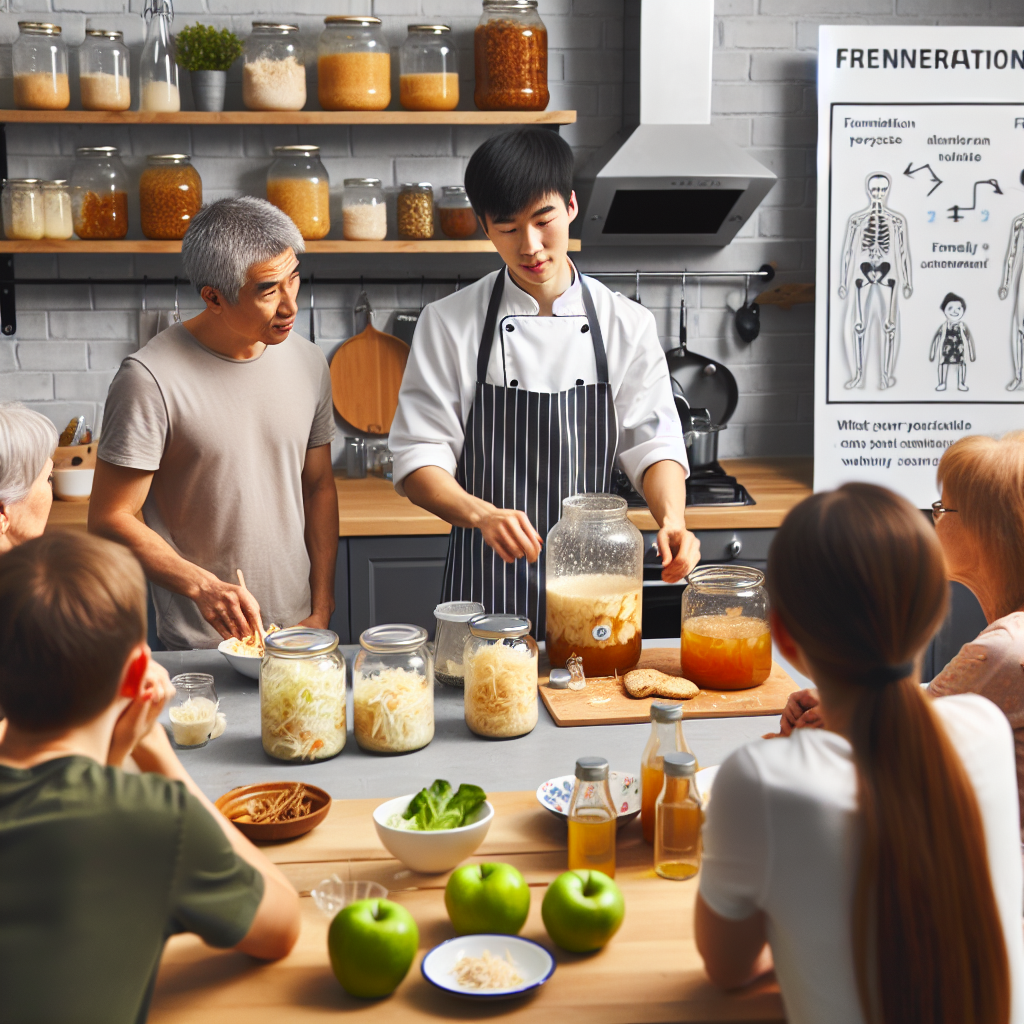
 # Stirring the Pot with Chef Mac: Ferments for Busy Families
If you’ve ever peeked at a jar of bubbling cabbage and wondered how something so simple could taste so interesting, you’re in good company. I remember my first batch of kraut: twenty minutes of prep, a week of waiting, and suddenly sandwiches, bowls and even school lunches had a little extra tang. That low-effort payoff is exactly why fermenting has found a sweet spot in busy kitchens — it’s hands-on when you want it to be, and hands-off the rest of the time.
## Why fermenting works for cramped schedules (and hungry kids)
Ferments are a time-shifted kind of cooking. You do the busy work upfront — chop, salt, pack — then microbes take over. For families and millennials juggling jobs, commutes, or bedtime routines, that’s gold: 20–30 minutes of active time unlocks weeks of flavorful, shelf-stable condiments and sides. Ferments can be scaled too: one jar for weekday sandwiches or a crock that feeds a whole potluck.
There’s also a cultural resurgence at play. From Korean kimchi to Mexican tepache and Eastern European sauerkraut, fermenting is a global craft repopularized by chefs, home cooks and wellness-minded folks. We’re borrowing techniques, swapping flavors, and making traditions work for modern fridges and smaller apartments.
## The simple science: what’s actually happening (and why it matters)
Most of the ferments we talk about rely on lactic acid bacteria — friendly microbes that convert sugars into lactic acid. That acid preserves the food and creates the tang we love. A few practical takeaways from that tiny ecosystem:
– Salt isn’t just seasoning. It controls which microbes thrive, draws out water (creating brine), and keeps vegetables crisp. For shredded kraut aim for about 2% salt by weight; whole heads often use closer to 3%.
– Temperature controls speed. Room temperature (roughly 65–72°F / 18–22°C) is a good compromise: active fermentation in days to weeks. Colder slows things; warmer speeds them up and can push flavors toward more sour or funky.
– Oxygen matters. Many desired ferments are anaerobic — keep solids submerged under brine and use weights or airlock lids so yeasts don’t take over and mold stays out of the picture.
Understanding these simple principles lets you troubleshoot: too slow? Try a warmer corner. Too yeasty? Check your lid and weights.
## Technique breakdown: containers, salt math and timelines
– Containers: For small households, quart or half-gallon glass jars are perfect — stackable, affordable and low-odor. If you want whole heads or seasonal batches, a food-grade plastic bucket or a crock with a plate weight works well. Traditional wooden barrels are charming but larger and higher-maintenance.
– Salt math: Weigh your vegetables if you can. Aim for 2% salt by weight for shredded kraut (roughly 1 tablespoon per 1.5–1.75 pounds as a quick guide). Whole heads usually need a bit more salt combined with a brine to keep the interior submerged during a longer ferment.
– Timelines: Quick pickles and tepache: a few days to a week. Sauerkraut and kimchi: 1–4 weeks at room temp (taste as you go). Fermented hot sauce or umami pastes like gochujang can take weeks to months depending on depth of flavor you want.
A reliable family-friendly kraut routine I use at home:
– Shred one medium cabbage, sprinkle roughly 2% salt by weight, and massage until it releases juices.
– Pack tightly into a jar, press so brine covers the cabbage, and place a weight or a small jar filled with water on top.
– Cover with an airlock lid or a cloth; check and taste after 1 week and refrigerate when it reaches your preferred tang.
## Safety first (but don’t panic)
Fermentation is generally safe, but a few sensory checks will save you stress:
– Keep notes: date, ingredients, salt percentage and room temperature. Notes are your best troubleshooting tool.
– Look & smell: Normal ferments smell pleasantly sour, yeasty or vinegary. Bubbles, cloudiness and a milky brine are often fine. Red flags: fuzzy or brightly colored mold (green, black, blue), rotten/putrid odors, or slimy, badly discolored textures. If that appears, discard the batch.
– When in doubt, toss it. Food safety over frugality — start again with cleaner tools and the notes you took.
## Practical tips for apartment life and families
– Smell control: Use fermentation lids with airlocks, burp jars outside, or ferment in a cool, ventilated nook like a garage or basement (if temperatures are stable). Smaller, more frequent jars reduce the “big stink” if someone’s sensitive to cabbage tang.
– Kid-friendly tweaks: Add apple, grated carrot, or a pinch of sugar to kraut for a milder, sweeter flavor kids will accept. Tepache (pineapple ferment) is fizzy and fun for older children — serve diluted with sparkling water.
– Use your ferments: Add kraut to sandwiches, kimchi to rice bowls, kombucha concentrates in cocktails or mocktails, and garlic honey on toast. Ferments are flavor multipliers — a spoon can change an ordinary weeknight bowl into something memorable.
## Cultural context: respect, remix, repeat
When we borrow ferments, a little respect goes a long way. Kimchi, miso, gochujang, shoyu and many more have centuries of culture behind them. Learn the basics of the style you’re exploring, taste traditional versions, then remix with local produce and family preferences. That playful, informed approach keeps fermentation both authentic and personal.
## A few starter projects to try this weekend
– Kraut remix: cabbage + apple + caraway or grated carrot.
– Tepache: pineapple rind + piloncillo or brown sugar, ferment 3–5 days for a light fizz.
– Garlic honey: whole peeled cloves submerged in honey — quick, mellow and delicious (store refrigerated after fermentation activity calms).
– Gochujang-style paste: make a small batch with miso, chili flakes, rice powder and salt for a fast-fermented sauce.
Fermenting is equal parts science and joy: a little technique goes a long way, and the rest is tasting as you go. Start small, keep notes, and don’t be afraid to fail (you’ll learn faster that way). Now tell me — what would you ferment first in your kitchen, and how would you use the finished jar to upgrade a weeknight meal?

