
 # Impress Without the Stress: Three Restaurant-Worthy Plates You Can Pull Off on a Weeknight
Busy week? You don’t need a fancy kitchen or hours of prep to serve something that looks — and tastes — like it belongs on a restaurant menu. With a little reading up, a few smart shortcuts, and some playful plating, you can turn humble ingredients into a meal that wows the family (or your friends) without bogging down the evening. Below I’ll walk you through three elevated-but-doable dishes, explain the techniques that make them sing, and give practical tips so you can actually make them on a weeknight. — Chef Mac
## Read Before You Cook (PSA)
Before you fire up the stove, take a minute to scan the recipe. It’s one of the best time-savers you’ll find. Many mistakes come from skipping steps, not preheating, or missing a small prep job that becomes critical later. Read the whole thing, assemble ingredients, and plan a rough timeline.
Why this matters: professional kitchens live by mise en place — everything in its place — because timing is everything. If you sear protein before your oven is hot, or you forget to chill a plate for crudo, textures and temperatures suffer. A quick read keeps you calm, improves timing, and prevents last-minute scrambles.
If something feels under-specified, look for a quick tutorial — and if you’re dealing with raw seafood, double-check freshness and safe handling. Keep seafood cold, buy sushi- or sashimi-grade scallops for raw dishes, and trust your nose: if it smells off, don’t risk it.
—
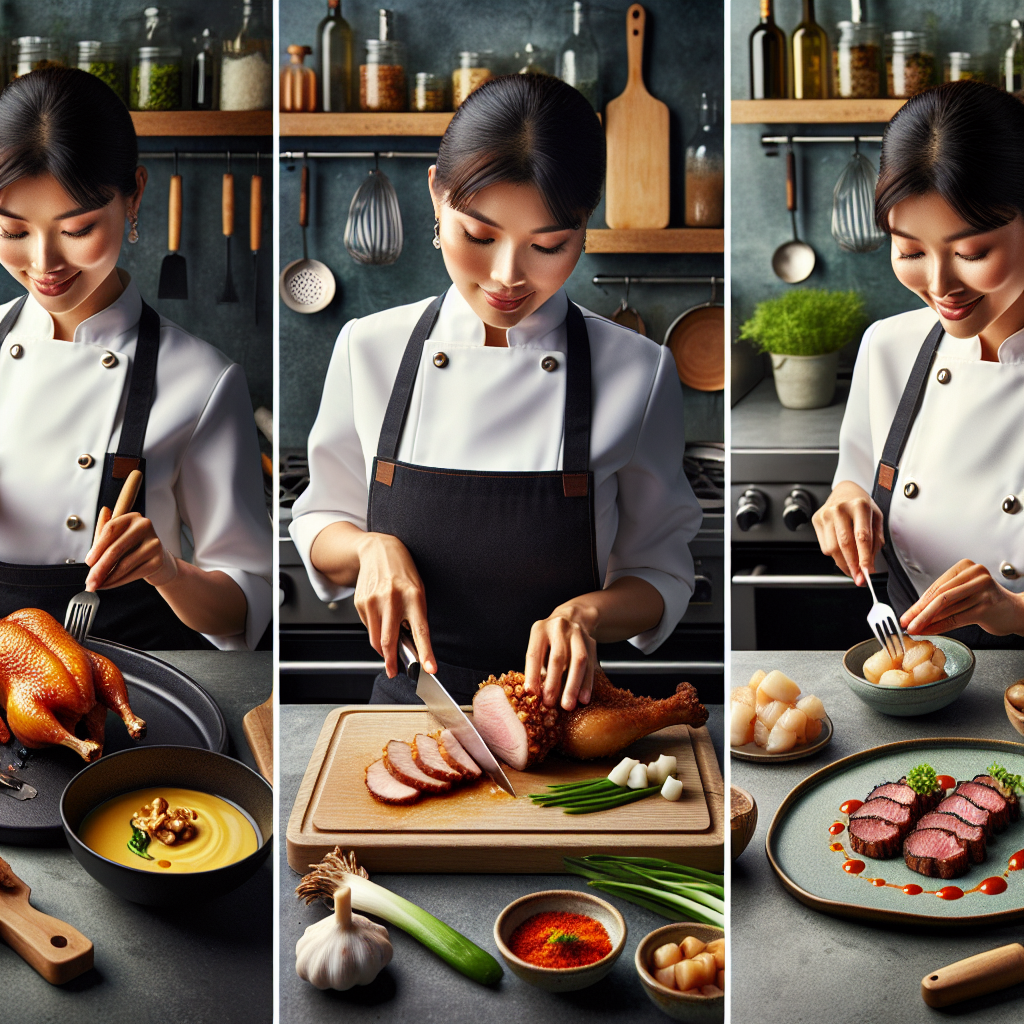
## Dish 1 — Walnut-Crusted Duck with Roasted Beets and Sweet Apple Cigars
Why it’s special: Duck brings richness and mouth-coating fat that feels luxurious; a crunchy nut crust introduces contrast and texture. Paired with earthy beets and a sweet-tart apple element, the plate hits richness, acid, and crunch — the trio that makes restaurant plates feel complete.
Technique & why it works:
– Scoring the fat: Lightly score the duck fat in a diamond pattern without cutting into the flesh. This increases surface area so the fat renders steadily and crisps the skin. Rendering fat slowly lets you develop flavor without burning.
– Searing then oven-finishing: Start skin-side down in a cold pan and let the fat render slowly; once you have good color, flip and finish briefly in a hot pan or oven. This two-step approach preserves juiciness while creating color and texture.
– Nut crust application: Pressing a walnut-panko-lemon zest mix onto the warm, fat-side surface after searing helps it adhere without overcooking. The nuts add crunch and lemon lifts the dish.
Weeknight shortcuts:
– Buy pre-trimmed duck breasts and blot them dry — dryness equals better sear.
– Roast beets with a splash of balsamic to coax caramel notes; roast on the same sheet as other veg to save time and energy.
– Replace fiddly brik pastry cigars with sautéed apple slices glazed with maple and cinnamon; serve in phyllo tubes or heap alongside.
Sensory note: imagine the first cut — warm pink meat, a crack of nutty crust, the sweet-sour bead of beet reduction to cut the richness.
—
## Dish 2 — Scallop Crudo with Yuzu-Mirin and Scallop Ceviche with Passion Fruit
Why it’s special: Raw preparations showcase ingredient purity. Acid and fragrance change the scallop’s personality: thin slices feel silky and refined; a quick ceviche brine makes bites lively and bright.
Technique & why it works:
– Safety first: Use only top-quality, cold, sushi-grade scallops for raw dishes. Keep them on ice until the last moment.
– For crudo: Thin slices are about texture — they should be gently toothsome, not chewy. Dress with acidic yuzu-mirin vinaigrette to add umami-sweetness and brush with a herb oil to add green freshness.
– For ceviche: Citrus denatures surface proteins briefly, firming the scallop without heat. Brief is the key word — a long-brined scallop becomes rubbery. Add passion fruit for floral acidity and a little jalapeño-cilantro oil for heat and aroma.
Practical plating:
– Chilled plates keep the crudo from warming and losing its snap.
– For family service, spoon ceviche into toasted crostini or butter lettuce cups — it’s portable and fun for kids to assemble.
Cultural context: Raw fish dishes come from traditions that prize immediate ocean-fresh flavors — think Japanese sashimi or Peruvian ceviche. By borrowing acid-forward elements (yuzu, citrus, passion fruit) you’re honoring those traditions while making them approachable at home.
—
## Dish 3 — Iberian-Style Pork (Presa) with Yellow Romesco and Roast Kuri Pumpkin
Why it’s special: Presa (or pork collar/shoulder steaks) has marbling that yields deep pork flavor and a plush mouthfeel. Paired with romesco — a nut-forward Catalan sauce — and roasted kuri pumpkin, it’s hearty, bright, and seasonal.
Technique & why it works:
– Sear for Maillard: High-heat searing creates that caramelized crust (the Maillard reaction), which delivers savory, nutty notes. Then finish in a moderate oven to bring the center to the perfect doneness.
– Romesco logic: Romesco is a balance of roasted pepper sweetness, toasted nuts for body, sherry vinegar for acid, and smoked paprika for warmth. Toasting the nuts releases oils and flavor; blending with olive oil creates a sauce that’s both coating and bright.
– Roast squash properly: Cut uniform pieces so they caramelize evenly; a hot oven 200–220°C (400–425°F) encourages golden edges.
Weeknight pragmatism:
– Substitute presa with pork collar or a well-trimmed shoulder steak if needed.
– Use store-bought roasted red peppers to speed up romesco. Toast almonds in a skillet for two minutes to wake them up before blending.
– A spoon of persimmon or apricot jam with a touch of vinegar adds that restaurant-level sweet-tang finish.
Wine note: A chilled Albariño or a bright white with good acidity will cut the fat and refresh the palate.
—
## Plating and Family-Friendly Presentation
Plating doesn’t require perfection. A few rules of thumb:
– Use negative space: Don’t overcrowd. Let one or two elements sit as focal points.
– Think contrast: soft vs. crunchy, sweet vs. acid, warm vs. cool. Contrast is what catches the eye and the palate.
– Make it interactive: Serve components deconstructed so kids and picky eaters can choose. Sauces in small bowls, veg on the side.
– Keep garnishes edible and intentional: microgreens, citrus zest, or toasted nuts add color and texture rather than clutter.
—
## Time-Saving Strategies
– Do a one-hour mise en place earlier in the day: slice, zest, chop, and store ingredients. It’s the professional trick that makes weeknight cooking feel calm.
– Double or triple sauces and dressings; they keep in the fridge for days and freeze well. A weekend blitz yields weekday gold.
– Use the oven to multitask: roast beets and squash together; the oven doesn’t care about your schedule.
—
## Takeaway
You don’t need a whole Sunday to pull off a restaurant-quality dinner. A quick read of the recipe, thoughtful technique (why you sear, why you chill, why acid matters), and a couple of smart swaps can turn everyday ingredients into something special. These three dishes illustrate a simple principle: balance texture, temperature, and acidity, and you’ll make food that feels considered and joyful.
So — what will you try first this week: a citrus-bright scallop crudo, a nutty-crusted duck, or a cozy pork with romesco? I’d love to hear how you plate it — and any clever shortcuts you discover along the way. Time to get cooking (and maybe have a little thyme to get serious)?

