

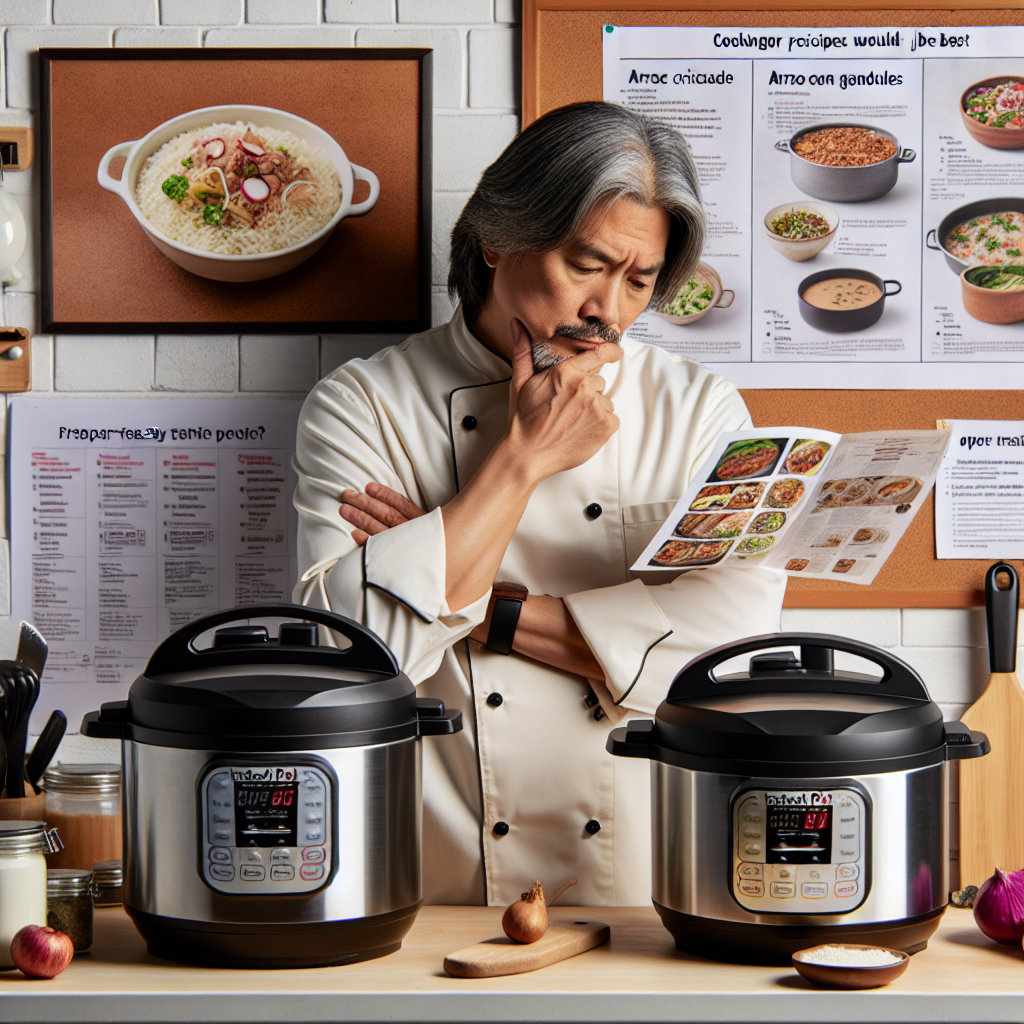
 # If you’ve joined the Instant Pot club — welcome!
Between midnight recipe rabbit holes and buying-advice threads, the Instant Pot quietly became a kitchen MVP for busy families and folks balancing careers, kids, and social lives. It’s more than a gadget: it’s a timing device, a flavor concentrator, and a confidence builder. But popularity also means a pileup of tips — some brilliant, some risky — so let’s talk about what to look for when buying, the why behind the techniques for two crowd-pleasers (Arroz con Gandules and chicken & rice soup), and how to keep your household safe and sane while learning from online communities.
## Picking the Instant Pot that fits your life (and why size matters)
Size is the practical first decision because it shapes how you cook. A 3-quart pot is perfect for singles or making sides; it heats quickly and uses less energy. A 6-quart is the sweet spot for most families: enough room for a roast, a full pot of soup, or batch grains. An 8-quart gives you headspace for big-batch cooking and freezing, but it takes longer to come to pressure and uses more countertop real estate.
Why this matters: pressure cooking is about trapped steam and headspace. Overfilling reduces the steam cushion and can affect both safety and texture. Choose the smallest pot that fits the volume you expect to make regularly.
Features to prioritize (and why):
– Programs and presets: They’re useful starting points, but understand the settings. A rice preset uses lower pressure and shorter time than a high-pressure stew cycle. Knowing the difference helps you avoid overcooking.
– Material: Stainless steel liners hold up to frequent use, tolerate high heat for reductions, and don’t leach. Nonstick is tempting for easy cleanup, but it scratches and shortens life.
– Accessories: Extra sealing rings, a steam rack, and an extra lid for multi-tasking are small investments that prevent frustration.
– Smart bells and whistles: Bluetooth and recipe apps are nice, but prioritize durability and basic functions over gimmicks you’ll never use.
## Safety first — read the manual (seriously)
Instant Pots are designed with multiple safety interlocks, but they are still pressure vessels. Read the manual for your model; the advice is model-specific. Replace cracked lids, warped inner pots, or stretched sealing rings. For food safety: refrigerate cooked food within two hours, and when in doubt, toss it. If you encounter sketchy advice online — a recipe that recommends tweaked safety steps or a damaged part — pause and ask a trusted source or the manufacturer.
## Technique breakdown: Arroz con Gandules in the Instant Pot
Arroz con Gandules is aromatic and soulful — it rewards attention to technique more than a strict ingredient list. Here’s the why behind the steps so your version sings.
– Sauté for flavor: Brown your sofrito base (onions, peppers, garlic) in oil or lard. Sautéing builds fond — browned bits that dissolve into the liquid and deepen flavor. Pressure cooking without that step can give you a flat-tasting rice.
– Layering spices: Toast cumin and oregano briefly during the sauté to bloom oils and intensify aromatics. A bay leaf adds subtle background complexity.
– Liquid ratios and rice type: Medium-grain rice plus a 1:1 liquid ratio often works in modern Instant Pots because the sealed environment limits evaporation. But every pot is slightly different; if your first batch is gummy, reduce liquid slightly or try a quick-release after a short natural release.
– Beans and texture: Use canned gandules (pigeon peas) drained, or well-cooked fresh ones. They add body and earthiness without excessive liquid.
– Resting: Allow a few minutes of natural pressure release. That gives steam time to finish the cook gently and keeps individual grains intact.
Why these choices matter: with rice, technique controls texture. Browning and seasoning early builds layers; the pressure cycle finishes the grains quickly while preserving flavor.
## Chicken & rice soup that stores — and reheats — beautifully
Soup is a weeknight hero, but rice is a texture trap when stored. Here’s a practical workflow that prioritizes clarity and control.
– Cook components separately: Poach or pressure-cook chicken, shred it, and reserve the broth. Separating protein from starch lets you control texture when reheating.
– Undercook or separate rice: Cook rice slightly al dente, or store cooked rice separately and add it at reheating. Rice absorbs liquid over time and can turn gluey in the fridge or freezer.
– Jar and freeze smartly: Use freezer-safe containers and leave headspace for expansion. If packing individual jars, layer shredded chicken, rice (or not), and cooled broth so you can thaw and combine on the stove.
– Reheat gently: Bring broth to a simmer, add shredded chicken and rice, and warm through. A gentle simmer unites flavors and keeps proteins tender.
Why this approach works: separating components preserves texture and increases flexibility. You can turn the same broth into a bright lemon-herb soup one night and a more savory stew the next.
## Community kindness — with boundaries
Online recipe groups are incredible resources. Share what worked, ask follow-ups, and be generous with troubleshooting. But be ready to call out potentially harmful advice — poorly sourced pressure-cooking tips, safety shortcuts, or recipes that encourage using damaged equipment. Flag them, message a moderator, and guide newcomers toward verified resources.
## Practical takeaways
– Buy the size you’ll use every day, not the biggest model on sale.
– Prioritize stainless steel and extra sealing rings over flashy extras.
– Sauté and season early when making one-pot rice dishes to layer flavor.
– Store soup components separately to preserve texture.
– Read your manual and replace damaged parts; when in doubt, ask the maker.
Cooking with an Instant Pot is part appliance, part confidence booster. It can turn weekday chaos into ordered deliciousness if you pair sensible technique with basic safety habits. Start with a simple Arroz con Gandules, practice your rice ratios, and try the separate-components method for soups. The results will teach you faster than any tip thread.
So, what Instant Pot experiment are you itching to try this week — a new twist on a family classic, or a freezer-friendly staple to make weeknights easier?

